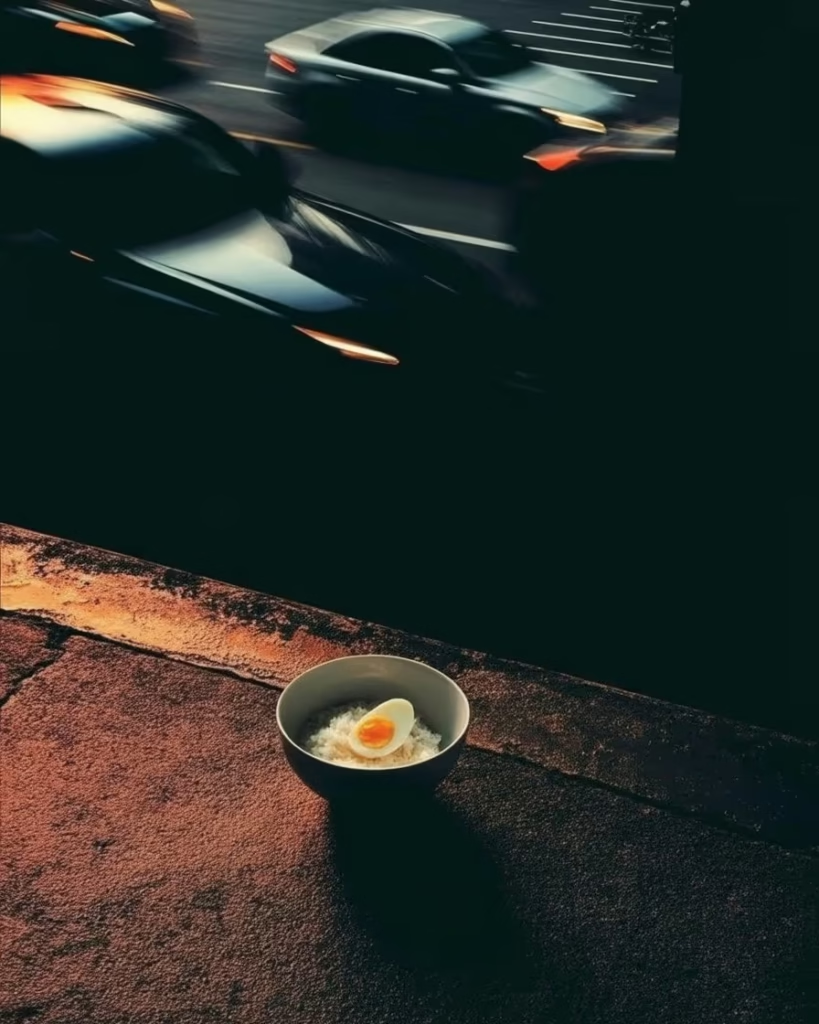
Each Night We Rehearse Dying—and Practice Return
Every night I practice dying, surrendering consciousness voluntarily, releasing my grip on the day and allowing myself to dissolve into the temporary nonexistence we call sleep. I close my eyes and trust that I will return, but every sleep is a small death, every awakening a small resurrection, every night a rehearsal for the final performance when I won’t wake up.
The realization came during a particularly deep sleep when I woke with no memory of the intervening hours, no dreams to bridge the gap between lying down and opening my eyes. Eight hours had vanished completely, as if I had simply ceased to exist and then resumed existing, with no continuity of experience to connect the before and after. This, I understood, is what death must be like—not painful or frightening, just an absence, a gap where consciousness used to be.
Sleep teaches us that consciousness is not continuous, that the self can disappear and return, that existence is more fragile and intermittent than we usually acknowledge. Every night we prove that we can survive nonexistence, that the ego can dissolve without permanent damage, that the fear of not being is worse than the actual experience of not being.
The nightly rehearsal shows us that death might not be the enemy we imagine but simply a longer sleep from which there is no waking. If sleep can be peaceful, restful, even necessary, perhaps death is just sleep’s logical conclusion—the final rest after a long day of being conscious.
But the rehearsal also reveals what death will take: the possibility of return, the expectation of morning, the assumption that consciousness is renewable rather than finite. Sleep is practice for dying but also a reminder of what makes dying significant—the knowledge that this particular form of awareness, this specific arrangement of thoughts and feelings and memories, will not resume once it stops.
Maybe learning to sleep well is learning to die well—releasing the day without clinging, surrendering control without panic, trusting the process even when we can’t understand it. Maybe the peace we find in sleep is preparation for the peace we might find in death, practice for the ultimate letting go.
Tonight I approach sleep not as escape from life but as preparation for death, not as temporary unconsciousness but as rehearsal for permanent consciousness-ending, recognizing that every night offers practice in the art of letting go that we will someday need to master completely.