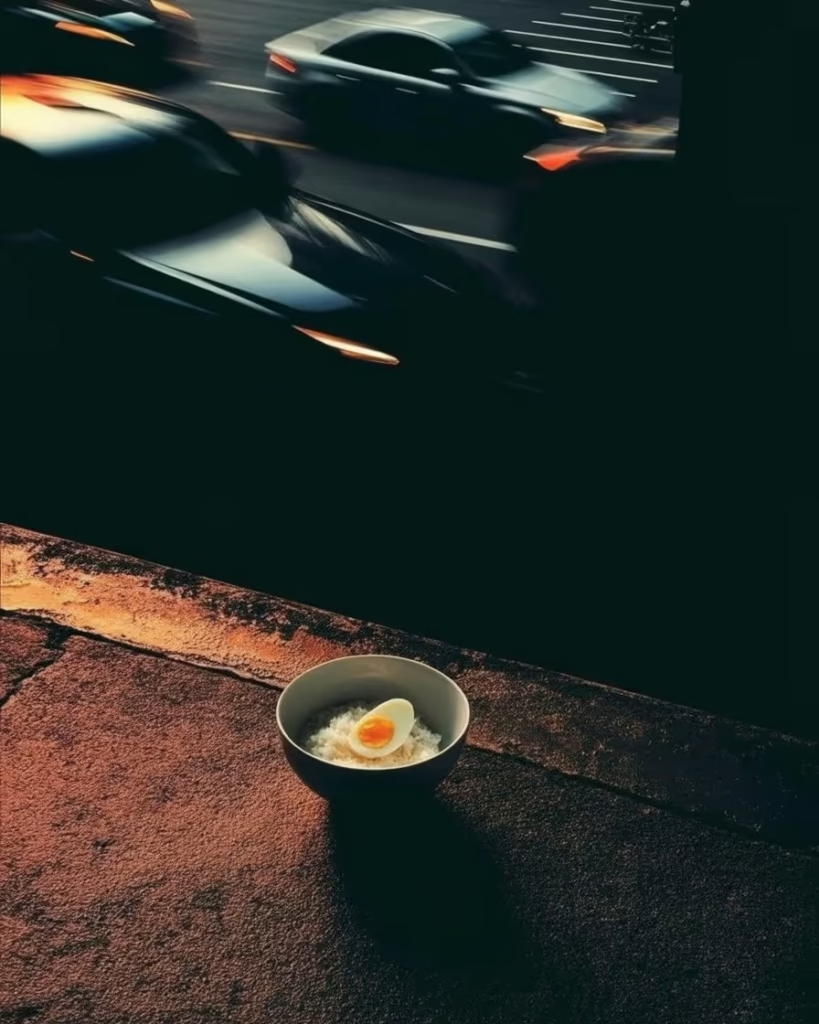
Ruti on the Plate—Hours in the Bin
The ruti grows hard on my plate while I scroll through messages, each passing minute transforming breakfast into waste. Guilt arrives with the realization: another meal treated as background noise while life happens elsewhere.
“Khabar noshto korish na,” my mother used to say. Don’t waste food. But she never said: “Shomoy noshto korish na.” Don’t waste time. Perhaps she understood that time feels infinite until it isn’t, while hunger announces itself with immediate urgency.
We measure food waste in grams and feel appropriate shame. We measure opportunity waste in nothing and feel nothing.
The half-finished meal on my plate represents perhaps 50 taka of lost value, maybe 200 calories that could have sustained someone else. The half-lived morning represents irreplaceable hours, conversations not had, thoughts not developed, presence not practiced.
Which loss weighs more?
Food guilt is socially acceptable, even virtuous. It connects us to global awareness, environmental consciousness, respect for resources. Opportunity guilt feels selfish, privileged, the luxury of people who have too many choices rather than too few.
But both wastes share common psychology: the assumption of endless supply. We leave food because we know more meals are available. We postpone important conversations because we assume unlimited tomorrows exist.
The cruel arithmetic: food can be replaced more easily than time, yet we guard leftovers while squandering moments.
“Ami kal korbo,” I tell myself. I’ll do it tomorrow. The same voice that says “Ami pore khabo.” I’ll eat later. Both statements assume a future that may not cooperate with our delayed intentions.
Maybe the deepest waste isn’t what we throw away, but what we never fully consume—meals eaten without tasting, opportunities encountered without engaging, days lived without inhabiting.
The ruti goes to the garbage. Tomorrow I’ll try to waste neither bread nor possibility, understanding finally that both spoil when left unattended.