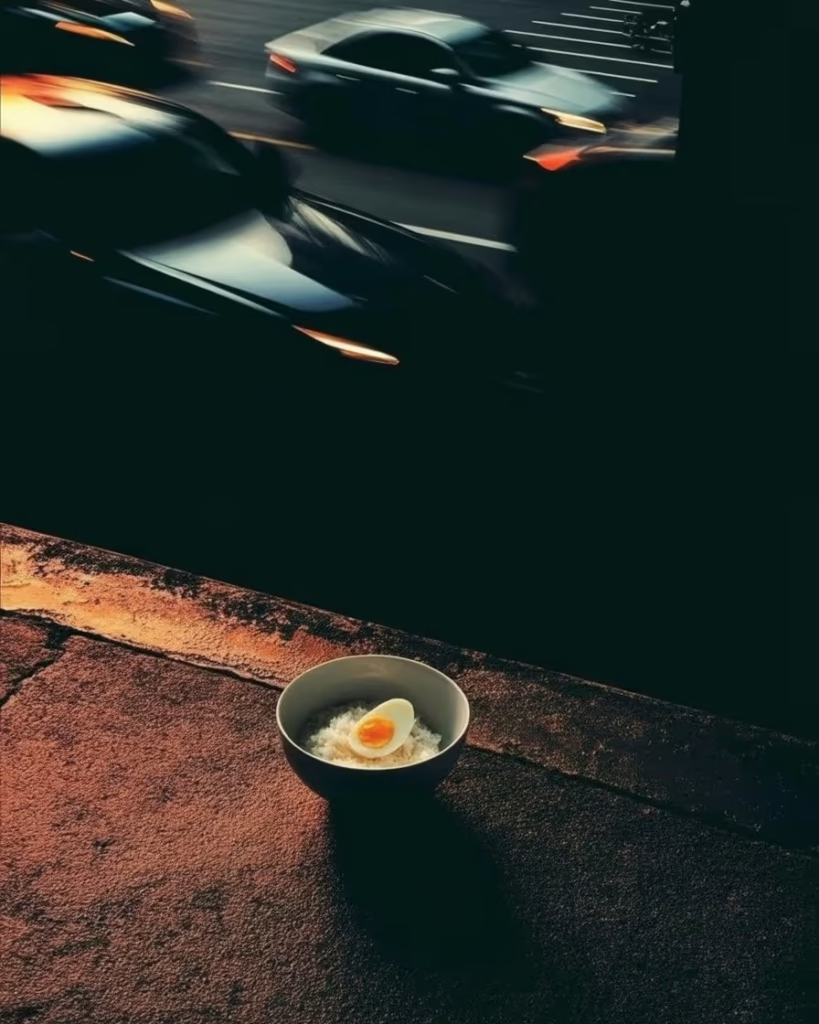
Cooking Through Sadness
When sadness arrives, I build elaborate meals like cathedral projects—complex, time-consuming, requiring total attention to intricate details that leave no space for the emptiness to echo.
Happy days call for simple food. Toast, fruit, whatever satisfies hunger without demanding ceremony. Joy needs no distraction from itself.
But grief craves projects. The more complicated the recipe, the more completely it occupies mental space that might otherwise fill with sorrow. Chopping vegetables becomes meditation. Stirring becomes prayer. The kitchen transforms into workshop where pain gets processed through precise, methodical creation.
The Architecture of Attention
“Keno eto jhamelar ranna?” (Why such complicated cooking?). Happy asks when she finds me making elaborate biryani at 2 AM after particularly difficult day. Why such complicated cooking?
Because complexity demands presence. Sadness pulls consciousness backward into regret or forward into anxiety. But complicated cooking anchors attention to immediate moment—this temperature, this timing, this exact proportion that won’t wait for emotional availability.
The recipe becomes tyrant that won’t accommodate mental wandering. Miss the moment when onions caramelize, and they burn. Forget to temper spices at precise heat, and they lose potency. Complicated cooking is merciless taskmaster that insists on full engagement or threatens ruination.
This forced presence is the gift. For those hours in the kitchen, pain must wait outside. There’s no bandwidth for rumination when hands are working, timers are running, multiple burners demand coordination. The mind finds temporary relief not through escape but through complete absorption in task that matters just enough.
The Hierarchy of Happiness and Hunger
Happy people eat to live. Sad people cook to survive.
When contentment fills the day, food serves purely functional purpose. Quick omelet, simple salad, handful of nuts. The meal is intermission, not main event. Happiness has better things to think about than lunch.
But when sorrow settles in, suddenly there’s too much time and too much thinking. The mind becomes dangerous neighborhood to wander alone. Empty hours stretch threateningly. Thoughts circle like vultures.
Enter the elaborate meal: Kashmiri rogan josh that requires overnight marinating, hand-ground spice paste, three different cooking stages. Croissants from scratch with their temperamental butter lamination. Homemade pasta with sauce that simmers for hours, demanding periodic attention and adjustment.
These aren’t meals. They’re time machines that transport us through dangerous hours, delivering us safely to the other side of the day when exhaustion finally permits rest.
The Strange Alchemy of Grief
Elaborate meals created in sadness often taste better than simple meals created in happiness. This isn’t imagination. Grief seasons food with attention that contentment can’t match.
The happy cook is careless in the best way—a pinch of this, whatever amount of that, good enough is genuinely good enough. The result is satisfying but unremarkable. Joy makes adequate cooks.
The sad cook becomes obsessive perfectionist. Every measurement exact. Every step followed religiously. Every detail scrutinized. Sorrow makes careful cooks. Pain sharpens focus to laser precision because the alternative is letting the mind drift toward what hurts.
The biryani I make after heartbreak has layers of flavor I can’t replicate when feeling fine. The bread I bake during grief rises with structural integrity my happy loaves lack. Sadness teaches patience—the willingness to wait for dough to proof properly, for flavors to develop fully, for techniques to work at their own pace.
Happy cooking rushes because happiness has places to be. Sad cooking waits because sadness has nowhere else to go.
The Evidence of Transformation
Maybe we cook elaborately when sad because creation becomes proof of our ability to transform raw materials into something nourishing, evidence that destruction isn’t the only response to pain.
When life feels like it’s falling apart, cooking demonstrates tangible control. These ingredients were separate, chaotic, unformed. Now they’re unified, structured, purposeful. If I can turn flour and water into bread, maybe I can turn chaos into meaning. If I can coax flavor from raw ingredients, maybe I can coax something worthwhile from raw experience.
The meal becomes metaphor without trying. Transformation happens through heat, pressure, time, attention—same elements required for processing grief. You can’t rush either process without compromising results. Both require willingness to sit with discomfort while change occurs.
There’s also generosity in feeding others when you’re hurting. The elaborate meal says: I may be broken, but I can still nourish. My pain doesn’t prevent me from providing. The act of cooking for others creates purpose when personal purpose feels lost.
The Ritual of Return
Complicated cooking establishes ritual in chaos. When emotional landscape becomes unfamiliar territory, the kitchen remains knowable. The techniques work the same regardless of heartbreak. Onions still caramelize at medium heat. Dough still rises with proper hydration and time. Salt still balances sweet.
These certainties become refuge. In world where relationships end unexpectedly, jobs disappear suddenly, health fails mysteriously, at least cooking follows rules. Apply heat, produce result. Follow process, achieve outcome. The reliability is therapy.
The kitchen becomes sacred space—not in religious sense but in creating boundary between inner turmoil and outer action. Enter sad, exit with something accomplished. The transformation happens twice: in the food and in the cook.
When Simplicity Returns
Eventually, the elaborate cooking phase passes. Not because sadness ends completely but because its shape changes. The acute crisis dulls to manageable ache. Life demands return to normal rhythms. Standing at the stove for hours becomes luxury rather than necessity.
The return to simple meals signals healing. Toast tastes good again not because it’s complicated but because it’s enough. The desperate need for distraction fades. The mind becomes safer neighborhood.
But the elaborate meals remain in the repertoire now, along with the knowledge they carry. The understanding that creation can meet destruction. That attention can anchor us when emotions threaten to sweep us away. That transformation is always possible, in the kitchen and beyond.
The next time sadness arrives—and it will—the kitchen waits. The complicated recipes stand ready. The ingredients remain available for the alchemy that turns grief into something that can, at least, be tasted and shared.
“Why such complicated cooking?” Happy asks.
Because sometimes the only way through pain is to build something intricate enough to require our complete presence. Because sadness needs projects that prove we can still create. Because elaborate meals are proof that even when we’re broken, we can still transform raw materials into nourishment.
The biryani simmers. The bread rises. The sadness waits.
And for these hours, at least, the kitchen is cathedral enough.