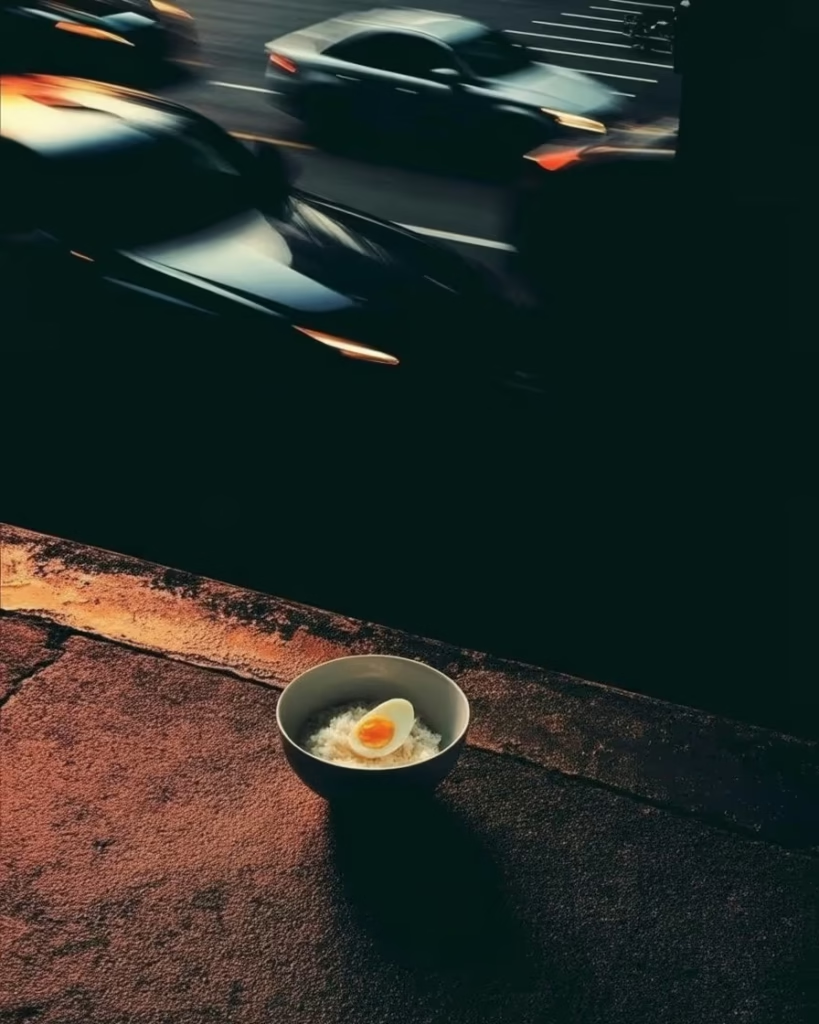
Where Language Ends, Art Begins to Speak
The moment came when I tried to explain my mother’s death to Arash and found every word inadequate. How do you tell a child about the particular silence that follows a final breath, the way hospital rooms feel after life leaves them, the complex mixture of grief and relief that arrives when suffering finally ends?
I drew him a picture instead—simple shapes and colors that somehow contained what my vocabulary couldn’t hold.
This is when art becomes necessary: when the human experience exceeds the capacity of language, when feelings are too large or complex for words, when the heart needs to communicate what the mind cannot articulate.
Happy and I had our worst argument three months after getting married. We spent hours throwing words at each other, each explanation making things worse, every attempt at verbal resolution deepening the misunderstanding. Finally, exhausted, she made tea in silence. The careful way she arranged the cups, the gentleness with which she placed mine before me—this small ritual said what our argument had failed to express: that we were still choosing each other despite the confusion.
Art speaks in frequencies below and above language. A melody can carry longing that a thousand words about desire would only diminish. A painting can show light in ways that no description can match. A dance can embody joy that would die if translated into sentences.
I write not because I have something to say, but because I have something I can’t say any other way. The stories emerge from places in experience where words usually fail—the texture of loneliness, the weight of time passing, the impossible tenderness of loving imperfect people perfectly.
Arash draws his nightmares because he can’t explain them. The monsters on paper aren’t literal representations but emotional landscapes, ways of giving form to fears that have no names. His crayon creatures contain truths about anxiety that adult psychology would struggle to capture.
Art isn’t translation—it’s its own language, speaking directly to parts of consciousness that remain untouched by verbal communication. When someone’s painting moves us to tears, we’re not responding to represented ideas but to transmitted experience, consciousness touching consciousness through color and form.
The most important human experiences happen in the spaces between words: birth, death, love, transcendence, the encounter with beauty, the confrontation with meaning. Art lives in these spaces, not as substitute for language but as language itself—the primary tongue of the soul when ordinary speech falls silent.