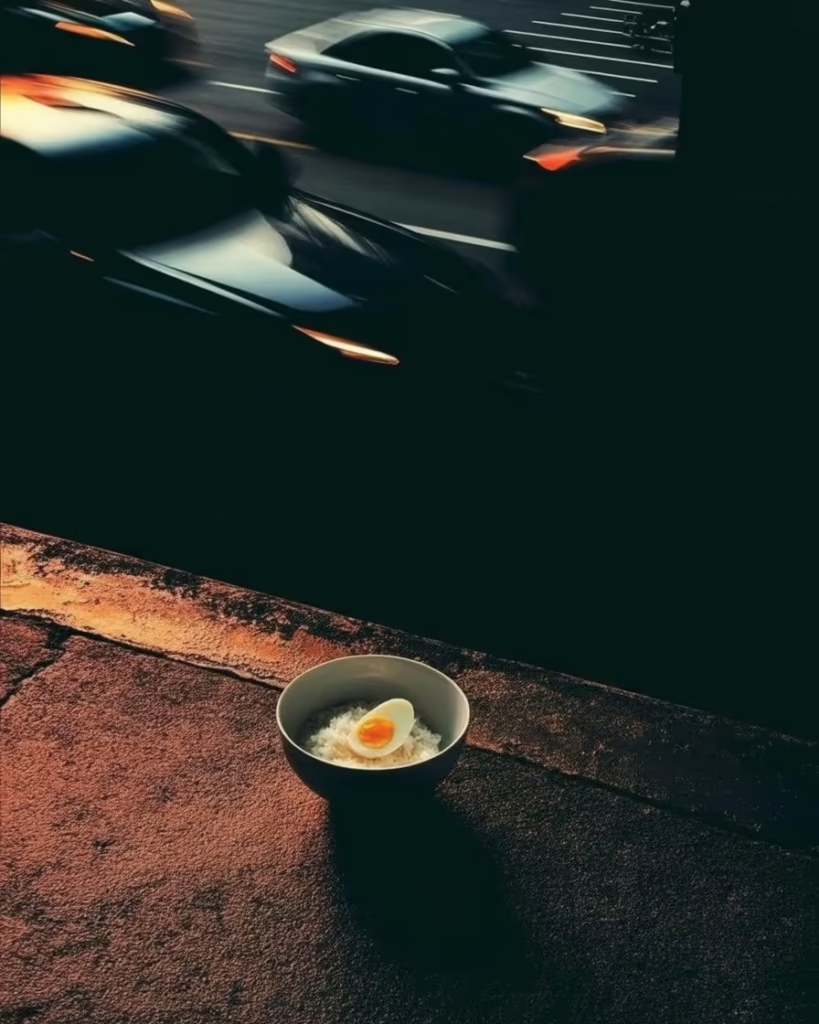
Every Wrinkle Is Proof You Survived Another Year
The moment I stopped complaining about turning forty was the moment I attended a funeral for someone who never would.
Shahid was thirty-two when the accident took him. At his janaza, watching his mother weep over a body that would never know gray hair or joint pain or the particular exhaustion of middle age, I understood something that changed how I see every new wrinkle.
Aging is a privilege denied to many.
Every birthday I celebrate is a victory someone else never achieved. Every ache in my lower back represents years of living that others were not granted. The reading glasses I need, the slower recovery from physical exertion, the gradual changes that I’ve been trained to see as loss—they’re actually proof of extraordinary good fortune.
This realization arrived like a physical blow. I’d spent months complaining about gray hairs while Shahid’s hair would never turn gray. I’d been frustrated by decreased energy while he lay in soil, his energy extinguished forever.
The mathematics are sobering: every human who dies young leaves behind an aging trajectory they’ll never complete. The teenager killed in a road accident will never know what forty feels like. The woman who dies of cancer at twenty-eight will never experience the particular wisdom that comes with decades of accumulated experience.
My complaints about aging suddenly felt like complaints about winning a lottery that billions of people never get to enter.
I think about my grandmother, who lived to eighty-seven, her body slowly failing but her mind sharp until the end. In her final years, she would say, “Every day above ground is a gift.” At the time, I thought it was just something old people said. Now I understand she was speaking literal truth.
Each morning I wake up sore from sleeping wrong is a morning someone else didn’t get. Each time I struggle to remember where I left my keys represents cognitive capacity that outlasted what others were allowed to keep. The slowness that frustrates me is movement that others can no longer achieve.
This doesn’t make aging easy or painless. The physical limitations are real, the losses genuine. But it reframes them: not as cruel unfairness but as evidence of unprecedented longevity, not as punishment but as the natural consequence of being allowed to live long enough to experience decline.
What if every sign of aging is actually a small celebration of survival?