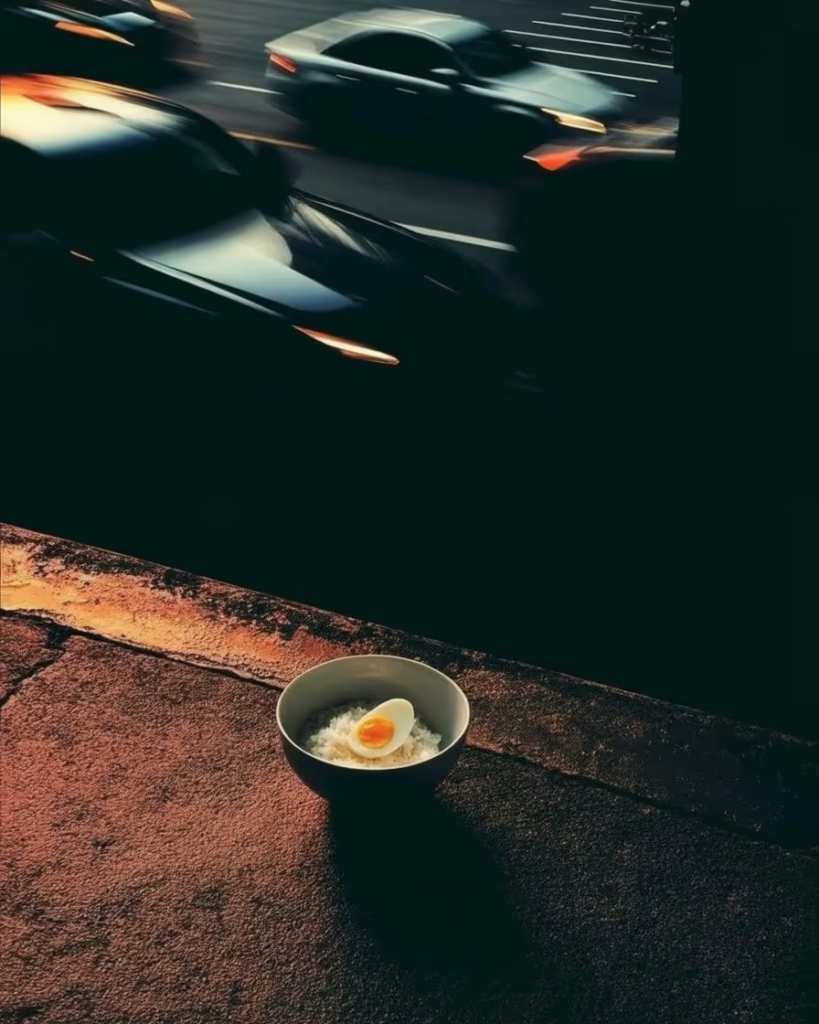
When You’re Alive and Already Disappearing
I can imagine dying peacefully, but I cannot imagine being forgotten while alive.
Death feels natural—the end of a story, the completion of a cycle. But irrelevance feels like erasure, like being edited out of a narrative that continues without acknowledging you ever existed.
The fear isn’t of ceasing to exist but of becoming irrelevant while still existing—watching the world move forward as if your contributions never mattered, your opinions never carried weight, your presence never made a difference.
What if the terror isn’t ending but being dismissed before the ending arrives?
Death has dignity. It’s final, inevitable, universal. Everyone faces it eventually, and there’s a kind of equality in that shared fate. We build rituals around death, acknowledge its significance, mark its occurrence with ceremony and memory. Death says: you were here, you mattered, now you’re gone.
Irrelevance offers no such dignity. It says: you’re still here, but it doesn’t matter. Your voice continues speaking, but no one’s listening. Your body persists, but your impact has ceased. You haven’t died, but you’ve stopped mattering, which might be worse because you’re conscious enough to witness your own obsolescence.
I watch elderly people in our neighborhood who’ve become functionally invisible. They exist, they move through spaces, they speak, but the world flows around them as if they’re not there. Their stories go unheard. Their opinions go unsought. Their presence registers only as obstacle or inconvenience—someone moving too slowly, taking too long, occupying space that others need.
This is the fate I fear more than death: becoming a living ghost, present but imperceptible, existing but irrelevant, watching life continue while being excluded from meaningful participation in it.
At least in death, people remember you as you were. They tell stories about your prime, honor your contributions, acknowledge what you meant to them. The narrative of your life gets preserved at its peak, frozen before decline erased your relevance.
But irrelevance while living means watching yourself be forgotten in real-time. People stop asking your opinion. Your expertise becomes “outdated.” Your contributions fade from institutional memory. You’re present for the erasure of your own significance, aware enough to understand what’s happening but powerless to prevent it.
Death ends suffering. Irrelevance prolongs it—the particular suffering of knowing you still have things to offer but no one wants them, insights to share but no one’s interested, love to give but no role that allows giving it meaningfully.
The cruelest aspect is that irrelevance can last decades. You might become culturally invisible at fifty but physically persist until ninety. That’s forty years of watching yourself not matter, of existing without significance, of being present but dismissed. Death would be mercy compared to four decades of conscious irrelevance.
Perhaps this is why some elderly people become bitter or demanding—not because aging makes you unpleasant, but because irrelevance makes you desperate. When no one listens to you voluntarily, you resort to forcing attention through complaint or need. When no one values your contributions anymore, you assert your existence through inconvenience. It’s not graciousness; it’s survival of the self in the face of erasure.
What if the terror isn’t ending but being dismissed before the ending arrives? What if the real death isn’t when your body stops but when the world stops noticing you exist? What if we’ve been fearing the wrong thing—preparing for mortality while remaining unprepared for the longer, slower death of becoming irrelevant while our bodies persist?
I can imagine my funeral—people gathering, sharing memories, acknowledging my impact however small. I can imagine dying with dignity, my story complete even if brief.
But I cannot imagine sitting in a room full of people who look through me as if I’m not there. I cannot imagine speaking and having my words dismissed as rambling. I cannot imagine existing without mattering, persisting without purpose, continuing without anyone caring whether I continue or not.
Death is an event. Irrelevance is a condition. Death happens to you. Irrelevance is done to you, repeatedly, daily, by a thousand small dismissals that compound into erasure. Death ends consciousness. Irrelevance forces consciousness to witness its own obsolescence.
Perhaps the real question isn’t how to avoid death—we can’t—but how to avoid irrelevance before death arrives. How to maintain significance while aging. How to ensure that we matter until we don’t exist, rather than ceasing to matter while still existing.
Because the worse fate isn’t dying. It’s being forgotten while you’re still here to notice.