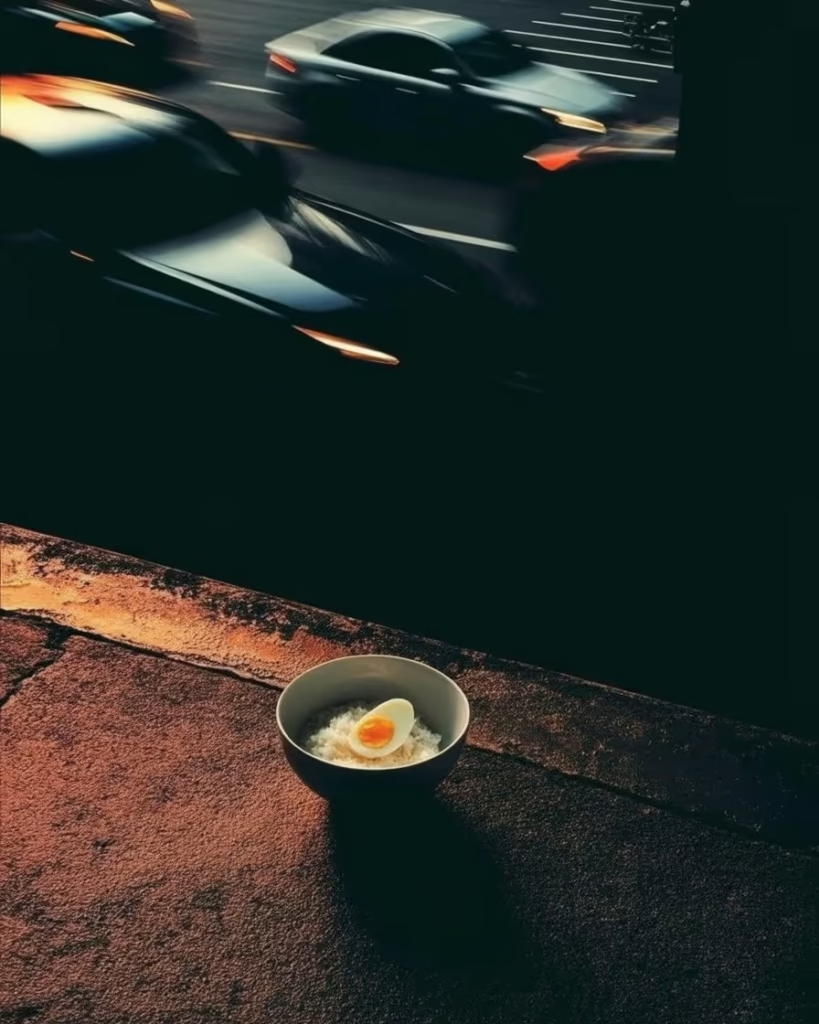
When Chrome Shines and the Body Whispers
My neighbor polishes chrome while I study my reflection in its surface—forty years of accumulated neglect written across this borrowed vessel I call my body.
When did I learn to treat myself worse than machinery?
Consider the paradox: this Corolla will rust and die within decades, yet receives meticulous attention. Oil changes scheduled with the precision of religious ritual. Tires rotated according to manufacturer specifications. Every strange sound investigated, every warning light taken seriously. This flesh—repository of consciousness, vessel of memory, the only thing truly mine—I fuel with caffeine and convenience, maintain with wishful thinking and the perpetual promise that I’ll “start taking better care of myself” next week, next month, after this project finishes.
Watch him inspect tire pressure with forensic precision. His hands know rubber’s needs better than I know bone’s requirements. He checks fluid levels religiously while I ignore the persistent ache mapping new territories across my lower back, the subtle wheeze marking time with each stair climbed. These signals arrive like concerned letters from a distant relative—acknowledged briefly, then filed away under “problems for future me.”
The body speaks in automotive metaphors we pretend not to understand. Warning lights flash—fatigue, headaches, that hollow gnawing where breakfast should be—but we’ve trained ourselves to drive through symptoms like red lights in emergency. “Just need coffee.” “It’s just stress.” “I’ll rest when this is done.” We override the dashboard, ignore the gauges, push the engine beyond its design specifications because there’s always somewhere we need to be that seems more important than where we are.
Merleau-Ponty understood: we don’t have bodies, we are bodies. Yet we’ve created this Cartesian split, treating flesh as vehicle rather than self. The mechanic under my neighbor’s hood knows combustion engines—understands timing belts and transmission fluid, can diagnose problems from sound alone. I barely recognize my own circulation, couldn’t tell you the last time I noticed my heartbeat outside of anxiety’s amplification.
This morning’s mirror reveals archaeological layers: twenty-year-old shoulders hunched from screens, the posture of modernity carved into muscle memory. Fifteen years of skipped meals carved into cheek hollows, each breakfast sacrificed to efficiency leaving its subtle mark. A decade of poor sleep etched beneath eyes that once saw clearly, now viewing the world through the fog of chronic exhaustion. I am a palimpsest of abandonment, each year’s neglect overwriting the last’s promise to “start taking care of myself.”
The body keeps score even when we stop counting.
In Kashmir, they believe the body is borrowed from earth and must be returned with interest. A sacred loan that demands honor through its brief tenure in our keeping. Native traditions honor flesh as sacred ground where ancestors dwell, each cell carrying forward the genetic wisdom of those who survived enough to make us possible. Yet here I am, a Western heir to the mind-body divorce, treating this temple like a rental I’ll return damaged, like a hotel room I’ll never see again.
The cruelest irony: I document my car’s maintenance history with obsessive precision—every oil change, every tire rotation, service records maintained because resale value matters—while forgetting when I last felt genuinely rested, properly nourished, present in this skin that carries everything I’ve ever loved or lost.
My neighbor starts the engine—purrs like contentment, that smooth idle of a well-maintained machine. I wonder: when did my body last hum with such satisfaction? When did I last listen to its rhythms without judgment, tend its needs without resentment? When did rest become reward rather than requirement, eating become inconvenience rather than nourishment, movement become punishment rather than joy?
We’ve inverted the hierarchy. The temporary machines receive our devotion while the irreplaceable organism that makes devotion possible gets the scraps of our attention. We’ll spend hours researching the right motor oil but can’t name the nutrients our cells are craving. We’ll drive across town for premium gas but grab whatever’s convenient to fuel the system that actually matters.
The body doesn’t complain loudly. Not at first. It whispers—a tight shoulder here, disrupted sleep there, energy that doesn’t quite return no matter how much coffee we pour into the tank. We’ve learned to ignore whispers, to push through signals that should stop us. We’ve made endurance a virtue and listening a weakness.
But whispers, ignored, become shouts. The ache becomes injury. The fatigue becomes illness. The warning lights we drove through become breakdowns we can’t ignore. And then we’re shocked, genuinely surprised that decades of neglect have consequences, that treating the body like an infinite resource eventually reveals its finite nature.
Perhaps the answer lies not in discipline but in recognition. This flesh that houses thought, this breathing sculpture that makes love possible, this temporary cathedral of sensation—it deserves the devotion I give to things that will outlive neither of us.
What would change if I treated my body with the attention I give my laptop? If I monitored my energy levels with the vigilance I give battery percentages? If I investigated discomfort with the urgency I give to strange computer noises? If I scheduled maintenance for this irreplaceable machine with the same care I give replaceable electronics?
Tonight I will run hands along this geography I’ve ignored, checking for tensions like tire pressure, listening to the engine of breath, feeling for the subtle signals that say: I’m here, I’m willing, I’m the only vehicle you’ll ever truly own.
The body speaks a language we’ve forgotten, or perhaps never learned. It communicates in sensation, in energy, in the subtle feedback loops of comfort and discomfort that guide us toward what we need and away from what harms us. But we’ve trained ourselves to override this ancient wisdom, to ignore signals in service of schedules that don’t account for biology.
We know more about maintaining machines than maintaining ourselves. Can describe optimal tire rotation intervals but not optimal sleep cycles. Understand the importance of clean fuel for engines but not clean food for cells. Recognize that machines need rest between uses but believe somehow that we don’t.
The warranty on flesh expires daily. Every moment of neglect compounds, every ignored signal adds up, every promise of “I’ll take care of this later” accumulates interest. The maintenance manual is written in whispers only presence can decode—the language of sensation, the grammar of energy, the vocabulary of need that speaks without words.
My neighbor closes his hood, satisfied with his inspection. Everything checked, everything maintained, everything prepared for another week of reliable service. His relationship with his machine is one of respect, attention, care. He knows its needs and meets them. He listens to its signals and responds.
I should learn from this. Not to treat my body like a car, but to treat it at least as well as I treat my car. To give it the attention I give to temporary possessions, the maintenance I provide to replaceable machines. To listen when it speaks, to respond when it signals need, to honor the fact that it’s the only one I get.
Time to listen. Time to tend. Time to remember that the body is not transportation to the soul—it is the soul’s only true home.
The Cartesian divorce created orphans of us all, consciousness untethered from flesh, minds floating free of the meat that makes them possible. But we are not ghosts piloting biological machines. We are bodies. Fully. Completely. The separation is illusion, useful perhaps for philosophy but deadly for practice.
When I nourish my body, I nourish my mind. When I rest this flesh, I restore this consciousness. When I move these limbs, I shift these thoughts. They are not separate systems requiring separate maintenance. They are one thing, experienced from the inside, named inadequately by language that insists on division.
My neighbor’s car will last another five years, maybe ten with proper care. My body, if I begin now, might give me thirty more years of relatively functional service. The return on investment is obvious. The urgency is clear. Yet habits of neglect are deeply carved, patterns of postponement well-established.
But unlike the car, the body has capacity for regeneration, for healing, for returning to something closer to optimal if given the conditions it needs. Cells replace themselves. Tissues repair. Energy restores. The damage of neglect can’t always be undone, but it can often be arrested, sometimes reversed, always improved.
The body is remarkably forgiving. It tolerates years of poor treatment, adapts to chronic stress, compensates for inadequate fuel. It keeps functioning through conditions that would destroy any machine. This resilience is gift and curse—it enables survival but permits neglect. We can get away with mistreatment far longer than we should, which teaches us the wrong lessons about what’s sustainable.
Tonight, I will do something different. Not dramatic transformation—those rarely last—but small recognition. I will eat something nourishing without distraction. Will stretch this tight architecture of accumulated tension. Will sleep when sleepy rather than when permitted. Will listen to what this body needs rather than what my schedule demands.
Small acts of respect for the vessel that carries me. Minor maintenance for the machine I can’t replace. Beginning recognition that this flesh deserves at least what I give to chrome and rubber and metal that will outlive neither of us.
The body is always speaking. The question is whether we’re listening. Whether we can hear the whispers before they become shouts. Whether we can tend the warning lights before they become breakdowns. Whether we can remember, finally, that this borrowed flesh is the only thing that’s truly ours to care for.