
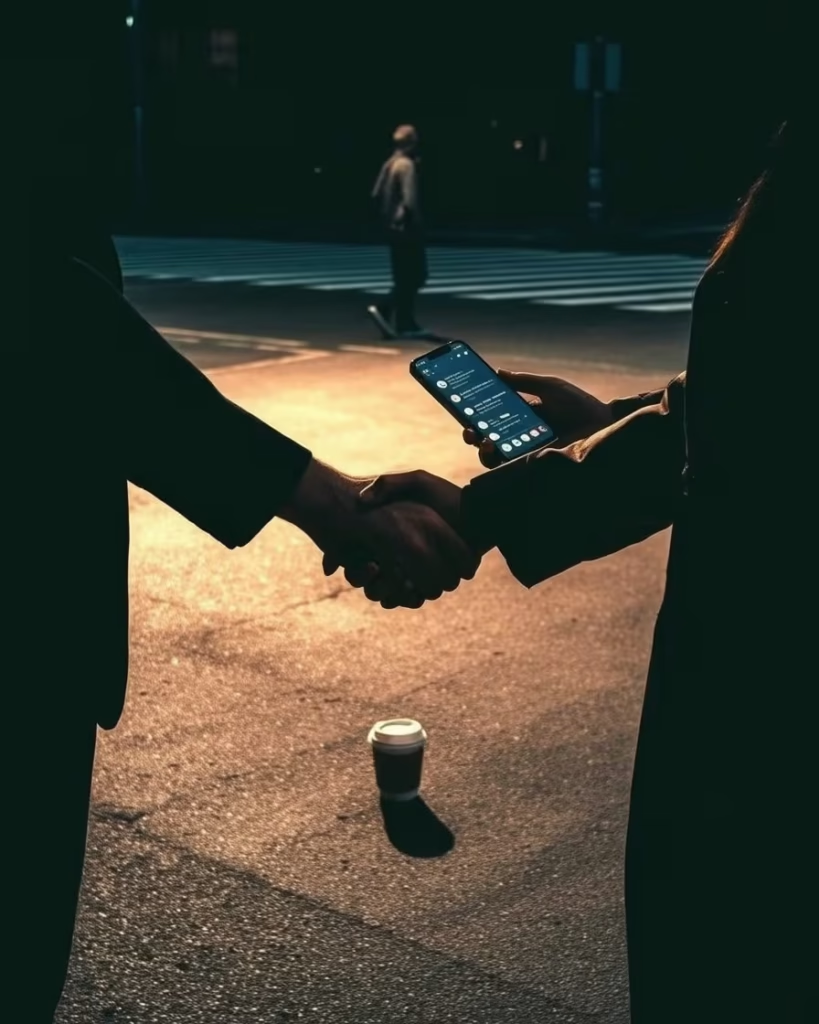
I stepped over a man on the sidewalk this morning.
Not around him. Over him.
He was lying across the concrete wrapped in something gray. I lifted my right foot higher than usual. Then my left. Phone in my hand. Article about poverty. Walking to the coffee shop.
The man didn’t move.
At the counter I ordered the latte. Seven dollars. The barista had a new nose ring. I took a photo of my coffee and posted it with the article underneath. Within an hour forty-three people had liked it.
My wife was reading when I got home.
“You’re on your phone,” she said.
“I’m reading.”
“What?”
“Corruption. In, uh—” I checked the screen. “Somewhere.”
She turned a page. “What are you doing about it?”
“What do you mean?”
“Are you doing something?”
“I’m sharing it.”
“With who?”
I looked at the numbers. “Two hundred people.”
“Do they care?”
“Some of them.”
“How do you know?”
I didn’t answer. She went back to her book.
The thing is, I can be angry about a country I’ll never visit. The government there will never ask me for anything. The people there will never see my face. I can post and post and nothing changes for me.
My colleague showed me her phone at lunch yesterday. Schools in rural areas. No funding. Children sitting on floors.
“Terrible,” I said.
“I know. I shared it twice already.”
“There’s a school board meeting next week,” I said. “Here. About funding.”
She looked up. “Here?”
“Three blocks away.”
“Oh.” Back to her phone. “I don’t really follow local things.”
“Why not?”
“Too boring.”
The schools her children might attend. Too boring.
I have posted about the man on the sidewalk before. Not him specifically. Men like him. The system that fails them. The cruelty of it. I use words like structural and inequality and indifference. People like those posts.
But I walk past him every day.
There’s a woman outside the grocery store. Same spot every time. She has a small brown dog that sleeps in her lap. I’ve seen her for four months. I don’t know her name. I’ve never stopped. I adjust my path slightly to the left as I pass.
Last month I shared seventeen posts about her situation. Not her. People like her.
“Why don’t you volunteer?” my wife asked one night.
We were eating. She wasn’t looking at me.
“Where?”
“The shelter. Downtown.”
“I don’t have time.”
“You have time to post.”
“That’s different.”
“How?”
I put my fork down. Picked it up again. Didn’t answer.
Posting feels good. Volunteering sounds hard. Depressing. Real people with real problems that won’t disappear when I close the app.
My father called.
“I saw your post,” he said.
“Which one?”
“Water crisis. Somewhere.”
I’d shared several. I couldn’t remember which.
“You should come home,” he said. “We’re having issues with the water treatment plant. The city’s trying to—”
“I can’t get involved in local stuff, Dad.”
“Why not?”
“I don’t have the time.”
Silence on the line.
“But you have time to post about water in places you’ll never see?”
I heard him breathing.
“It’s not the same,” I said.
“No,” he said. “Local might actually change something.”
He hung up.
I started watching what made me post.
Foreign corruption: immediate share.
Local budget meeting: scroll past.
International violation: fury, retweets.
Neighborhood association: boring.
Distant environmental disaster: solidarity.
Local recycling program needs help: not my problem.
The farther away, the more I cared. The closer, the less.
My wife said it simply. “You’re not interested in solving problems. You’re interested in feeling like you care.”
She was right.
Last month something happened.
The man on the sidewalk died.
Right there. Heart attack. He’d been lying there for hours before someone called.
I’d walked past him that morning. I’d been reading something on my phone. Statistics about poverty. I was angry about it. Righteously angry.
I hadn’t noticed he was dead.
The neighborhood organized a vigil. I didn’t go.
That night my wife found me sitting in the kitchen. Lights off.
“You couldn’t have known,” she said.
“I walked past him every day.”
“You couldn’t—”
“I never asked his name. I never gave him anything. I never looked at him. But I posted about people like him. I performed caring. Now he’s dead and I don’t even know who he was.”
She sat down. “So what now?”
I went to a city council meeting.
Just one. Just to see.
It was boring. Budget discussions. Zoning. Procedures. Nothing that would get likes. Nothing viral. Nothing dramatic.
But it mattered. Real decisions. Real people. Real time.
Almost nobody came to watch.
I started paying attention to local things. School funding. Development downtown. The water plant my father mentioned. Problems that affected people I might see. Places where my voice might matter.
I still check my phone. I still see the global news. I still care about those things.
But I stopped performing it.
Now I volunteer at the shelter twice a month. It’s uncomfortable. Depressing. Never feels like enough. The problems are complex. The solutions inadequate. The progress invisible.
Nobody likes it. It generates nothing.
But it’s real.
There’s a woman outside the grocery store now. Same spot the man used to lie in. She has a sign about being a veteran. I don’t know if it’s true.
Last week I stopped.
“What’s your name?” I asked.
She looked surprised. “Linda.”
We talked for five minutes. Weather. Her dog. How long she’d been in the city.
It wasn’t profound. It didn’t solve anything. It probably made no difference.
But I know her name now. She knows mine.
Such a small thing. Impossibly small compared to global crises and systemic failures and the overwhelming problems that used to fill my feed.
It would never trend. Never go viral. Never give me that rush.
But it happened. Real world. Real people. Real presence. Real discomfort.
My wife noticed.
“You’re on your phone less,” she said.
“Am I?”
“Much less. What happened?”
I thought about Linda. The shelter. City council meetings that determine how people actually live.
“I got tired of being angry about things I can’t change,” I said.
“And?”
“I wanted to try doing something about things I could.”
“How is it?”
“Harder. Less satisfying. Nobody applauds. Problems don’t go away.”
“But?”
“But it’s real.”
Tonight there’s a meeting about affordable housing. It won’t be exciting. It won’t generate content. But it matters to people who need housing. Here. Now. This city where I live.
I’m going.
Not to post about it. Not to perform caring. Not to feel sophisticated.
Just to show up. To listen. To be present for problems that exist in the same space I occupy.
The distance between anger and action.
It’s smaller than I thought.
Just the distance between a screen and a door.
I’m still learning to close it.
Maybe I will. Maybe I won’t.
But at least I’m trying.