
At the mosque last Friday, after prayers, an elderly man approached me with tears in his eyes. “Brother,” he said, “I’ve been praying for forty years for Allah to show me my purpose. What if He answers, and I don’t like what He tells me?”
I had no response because his fear was mine, articulated with the clarity that comes from a lifetime of wrestling with the same terror: What if we get what we’re asking for?
We tell ourselves we want answers. We pray for clarity, seek wisdom, demand explanations from a universe that seems determined to remain silent. But buried beneath our seeking is a darker truth—we’re often more comfortable with the mystery than we would be with the revelation.
I think about this when I watch Arash discover new things. Last week, he found a bird’s nest that had fallen from our neighbor’s tree. For days, he stared at it with wonder, asking question after question: How do birds know how to build? Why this shape? How do they choose the materials? Each question spawned three more, and I could see the joy in his eyes growing with each mystery uncovered.
Then I made the mistake adults often make—I googled “bird nest construction” and began explaining the scientific mechanisms behind nest-building behavior. I watched the wonder drain from his face as mystery transformed into mere information. The questions that had delighted him became problems to be solved rather than marvels to be experienced.
“Oh,” he said quietly, and put the nest away.
In that moment, I understood something I’d been avoiding: answers don’t just illuminate—they eliminate. Every question answered is a mystery killed, a possibility collapsed, a space for imagination closed forever.
This is why we’re afraid. We sense that getting the answers we think we want might rob us of something more valuable than ignorance—the rich, fertile darkness where possibilities live before they’re forced into the harsh light of certainty.
I remember when Happy and I were first married, spending long evenings talking about everything—our dreams, fears, the kind of parents we wanted to be, the life we would build together. There was magic in those conversations because everything was still possible. We could imagine ourselves as any kind of couple, any kind of family. The future existed in a state of infinite potential.
Fifteen years later, we have answers to many of those questions. We know what kind of parents we became (imperfect but loving), what kind of life we built (modest but meaningful). These answers are good answers, fulfilling in their own way. But something was lost in the knowing—the intoxicating possibility that we might become anything at all.
This is the price of answers: they make us specific when we might prefer to remain infinite.
I think about my relationship with faith, how for years I’ve asked Allah to show me the right path, to make clear what He wants from me. But lately, I’ve been wondering if my prayers are entirely honest. Do I really want God to speak directly to me, or do I prefer the ambiguity that allows me to interpret His silence in whatever way serves my current needs?
If Allah appeared tomorrow and told me exactly how to live, what to prioritize, which choices to make, would I be grateful or terrified? Divine certainty would eliminate the space for doubt, but it would also eliminate the space for growth, for wrestling, for the kind of faith that must be chosen rather than compelled.
The questions that keep me awake at night—Am I a good father? Am I wasting my life? Is there meaning in my suffering?—these questions are torture, but they’re also freedom. As long as they remain questions, all answers remain possible. I might be an excellent father whose mistakes will build character in my son. I might be living exactly the life I was meant to live. My suffering might be carving out space in my soul for greater joy.
But if I knew the answers with certainty, I would have to live with whatever truth was revealed. What if I discovered I am indeed a mediocre father? What if my life is genuinely meaningless? What if my suffering is just suffering, serving no purpose beyond its own existence?
Questions allow us to hope. Answers force us to know.
This is why we sabotage our own seeking. We ask for wisdom but turn away when it approaches. We demand truth but construct elaborate defenses against it. We pray for answers while secretly hoping God maintains His mysterious silence.
I see this in the way people approach therapy, education, spiritual practice—with one foot out the door, ready to retreat if the insights become too uncomfortable. We want to grow, but only in directions we’ve pre-approved. We want to change, but only into better versions of who we already think we are.
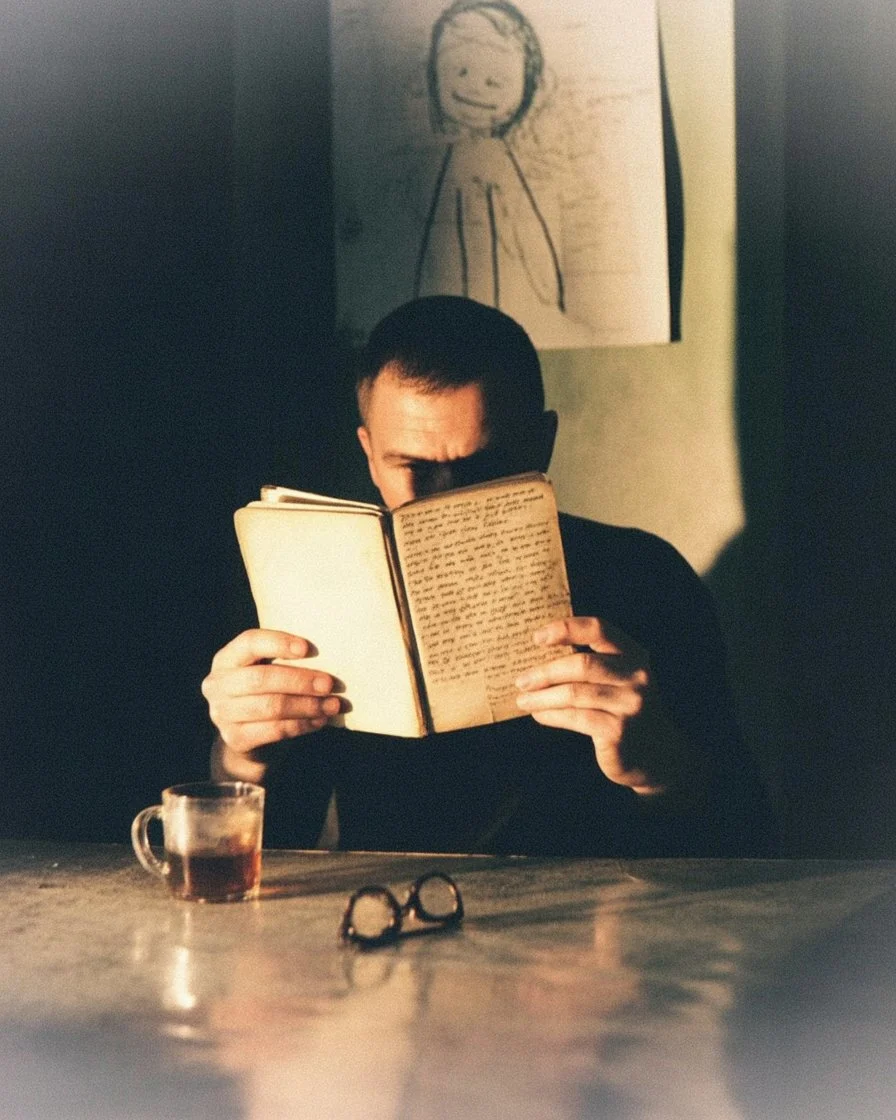
Last month, I started reading a book about Islamic philosophy that I’d been avoiding for years. I told myself I was too busy, but the truth was I was afraid it might challenge beliefs I wasn’t ready to examine. On page thirty-seven, I found an interpretation of divine justice that completely contradicted my comfortable understanding. I closed the book and haven’t opened it since.
This is what we do: we seek until we find something that threatens our carefully constructed worldview, then we stop seeking and pretend we never started.
But here’s what I’m learning: the fear of answers is really a fear of responsibility. Questions allow us to remain perpetual students, but answers make us accountable to what we know. Once you understand something, you can no longer claim ignorance as an excuse for inaction.
If I truly understood what it means to be a good father, I would have to become one. If I clearly saw what my life’s purpose is, I would have to pursue it. If I knew what God wanted from me, I would have to give it.
Questions are comfortable because they ask nothing of us but curiosity. Answers are terrifying because they demand change.
The elderly man at the mosque was afraid not that God wouldn’t answer his prayers, but that God would. He was afraid that divine purpose might look different from human preference, that the life God wanted for him might not be the life he wanted for himself.
I understood his fear because I share it. We all do.
But sitting here now, watching the morning light filter through our small window, I’m beginning to think our fear might be misplaced. Maybe the problem isn’t that answers are dangerous, but that we’ve misunderstood what answers are.
We imagine answers as destinations—final points that end the journey of seeking. But what if answers are more like rest stops—places to pause, gather strength, and then continue traveling? What if each answer we receive opens up new territories of questioning rather than closing down the search forever?
When Arash was three, he asked me where babies come from. I gave him an age-appropriate answer that satisfied him completely. Two years later, he asked the same question and needed a more detailed response. Now, at eleven, he’s beginning to ask it again, ready for information that would have overwhelmed him earlier. The same question, but deeper each time. The answer didn’t end his curiosity—it prepared him for greater curiosity.
Maybe this is how all seeking works. Maybe we’re not afraid of getting answers but of getting partial answers and mistaking them for complete ones. Maybe our resistance to clarity comes from sensing that any truth we’re ready to receive is necessarily smaller than the truth that exists.
The man at the mosque might discover his purpose and find it more beautiful than anything he could have imagined. Or he might discover it and realize it’s only the first chapter of a much larger story. Either way, knowing would free him to take the next step rather than remaining frozen in perpetual preparation.
I think about my mother in her final days, when I would sit beside her hospital bed holding her hand. I kept wanting to ask her what she was experiencing, what she was learning about death, what wisdom she might share. But I was afraid her answers might be too stark, too final, too different from the comfortable uncertainty I preferred.
Now I wish I had asked. Not because her answers would have solved the mystery of mortality, but because they might have shown me that facing truth—even difficult truth—is less frightening than avoiding it. Maybe her insights wouldn’t have diminished the mystery of death but revealed it to be an even deeper mystery than I had imagined.
This is what I’m slowly learning: the answers we fear usually turn out to be doorways rather than walls. They don’t end the conversation—they change the level at which the conversation occurs.
Tonight, when I pray, I think I’ll try something different. Instead of asking Allah for answers while secretly hoping for continued ambiguity, I’ll ask for the courage to receive whatever truth I’m ready to hold. I’ll pray not for easy answers but for the strength to live with difficult ones.
And maybe, if I’m honest enough, I’ll admit that my real fear isn’t getting answers I don’t like—it’s discovering that the answers I receive are more wonderful, more demanding, more transformative than anything I was brave enough to hope for.
Because perhaps the most terrifying answer of all would be that we are exactly who we’re meant to be, living exactly the life we’re meant to live, and that all our questioning and seeking has been preparation for the moment when we finally stop running from our own truth and learn to trust it instead.


Leave a thought