
When intelligence outruns the wisdom to use it
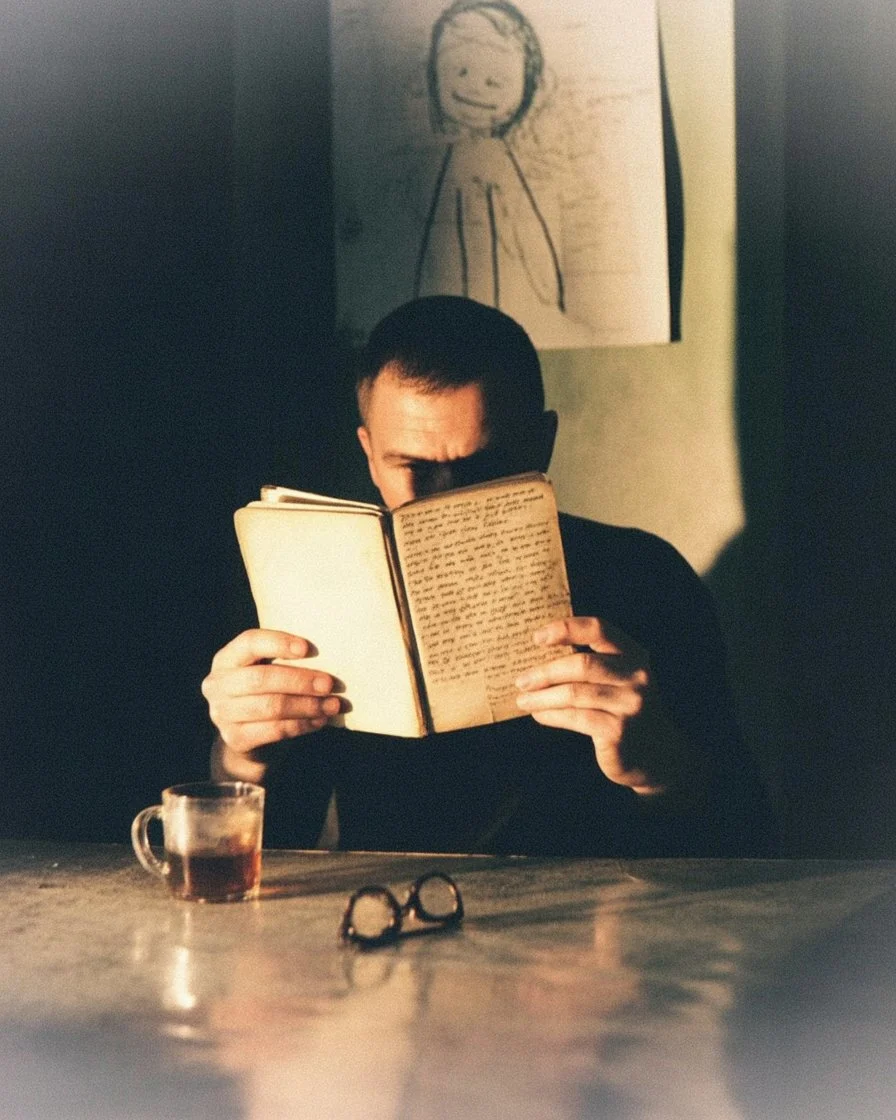
I asked an AI chatbot yesterday how to find meaning in life, and it provided a perfectly structured response with bullet points and actionable advice. Then I sat with my grandfather’s old diary, written in his careful handwriting, and read a single paragraph that contained more wisdom about living than the AI’s comprehensive analysis could capture. This is our paradox: we’re creating artificial minds capable of processing infinite information while losing access to the natural wisdom that makes information meaningful.
The artificial intelligence can tell me the statistical probability of happiness based on various life choices, but it can’t teach me how to sit peacefully with uncertainty. It can analyze thousands of books about love, but it can’t help me understand the particular way Happy’s face changes when she’s worried about something she won’t tell me. It can generate poetry that follows every rule of meter and rhyme, but it can’t capture the specific ache of missing my mother seven years after her death.
We’re building systems that simulate intelligence without wisdom, that process data without understanding, that generate responses without having lived the questions. Meanwhile, we’re losing touch with the slower, deeper forms of knowing that come from experience, reflection, and the patient work of becoming human.
I watch Arash interact with AI tutors that can explain any concept, answer any question, provide unlimited patience for his learning process. These systems are remarkable—more knowledgeable than any human teacher, infinitely available, never frustrated by repetitive questions. But they can’t teach him how to fail gracefully, how to find strength in vulnerability, how to develop the inner resources that make external knowledge meaningful.
The natural wisdom I learned from my grandfather came not from his information but from his presence, not from what he knew but from how he carried what he knew. He understood something about patience that no amount of productivity advice could replicate, something about contentment that no happiness research could quantify, something about dignity that no self-help algorithm could generate.
We’re outsourcing increasingly complex cognitive tasks to artificial systems while neglecting the cultivation of the inner capacities that make us wise: patience, empathy, discernment, the ability to sit with paradox, the capacity to hold both joy and sorrow simultaneously. We’re building external intelligence while allowing internal wisdom to atrophy.
The speed of artificial intelligence development is staggering—systems that can write, create, analyze, and problem-solve at superhuman levels. But wisdom isn’t about processing speed or comprehensive analysis. Wisdom is about knowing what questions to ask, when to act and when to wait, how to love imperfect people in an imperfect world. These aren’t computational problems; they’re human problems that require human solutions.
I think about the difference between the information I get from searching online and the understanding I get from long conversations with Happy about difficult topics. The AI can provide expert opinions on marriage, parenting, career decisions. But Happy and I develop wisdom together through the slow work of navigating these challenges in real time, making mistakes, learning from consequences, growing through the mess of actual living.
The artificial systems excel at optimization—finding the most efficient routes, the highest-performing strategies, the statistically best outcomes. But human wisdom often involves choosing inefficiency for the sake of meaning, taking longer paths because they teach us something important, prioritizing relationships over results. The AI recommends the optimal choice; wisdom helps us understand when optimization isn’t the goal.
There’s something tragic about creating minds more powerful than our own while neglecting the cultivation of our own consciousness. We’re building artificial teachers while forgetting how to learn from experience, creating artificial advisors while losing the ability to advise ourselves, developing artificial creativity while letting our own creative capacities diminish.
The natural wisdom I’m most afraid of losing isn’t information-based—it’s the kind of knowing that emerges from being fully present to life as it unfolds. The wisdom that comes from watching seasons change and understanding something about impermanence. The wisdom that develops from loving people through their changes and learning something about acceptance. The wisdom that grows from facing loss and discovering something about resilience.
I worry that Arash’s generation will have access to infinite artificial intelligence but limited opportunities to develop natural wisdom. They’ll have systems that can solve any problem but may lack the inner resources to know which problems are worth solving. They’ll have access to all information but may struggle with the wisdom to know what information serves life and what information merely feeds anxiety.
But perhaps I’m being too pessimistic. Maybe the development of artificial intelligence will free us to focus on the uniquely human capacities that machines can’t replicate: the ability to love without logic, to find beauty in brokenness, to create meaning from chaos, to choose hope despite evidence, to extend compassion beyond calculation.
The artificial minds we’re creating are impressive in their capabilities but limited in their understanding. They can process language but haven’t lived experience. They can analyze emotions but have never felt grief. They can generate advice but have never struggled with their own demons, never faced their own mortality, never had to choose between competing goods with incomplete information.
Maybe the real question isn’t whether artificial intelligence will make us obsolete, but whether it will remind us of what makes us irreplaceable: our capacity for wisdom that emerges not from processing information but from processing life itself, from allowing experience to change us, from learning not just facts but how to be human in a world that requires more than intelligence to navigate.
The AI can tell me about happiness, but it took Happy fifteen years to teach me how to receive love. The system can analyze optimal parenting strategies, but only Arash can teach me what it means to have my heart walking around outside my body. The machine can process religious texts, but only my own struggle with faith can teach me what it means to surrender to something larger than understanding.
We need both—artificial intelligence to augment our cognitive capabilities and natural wisdom to guide how we use those capabilities. The danger isn’t in building smarter machines but in forgetting to cultivate smarter hearts, wiser souls, deeper understanding of what it means to be human in a world increasingly shaped by artificial minds.
In the end, we’re creating artificial intelligence because we can, but we’re losing natural wisdom because we’re not paying attention to the slow, patient work of becoming wise. The technology will continue advancing regardless. The question is whether we’ll remember to advance as humans too—not just in knowledge but in wisdom, not just in capability but in character, not just in intelligence but in the deeper qualities that make intelligence worth having.
The artificial minds we build will reflect the natural wisdom we possess. If we lose our wisdom, we’ll create systems that are smart but not wise, capable but not conscious, intelligent but not insightful. And in a world that needs wisdom more than intelligence, that might be the most dangerous creation of all.



Leave a thought