
Creative Pressure: The Monotony Effect
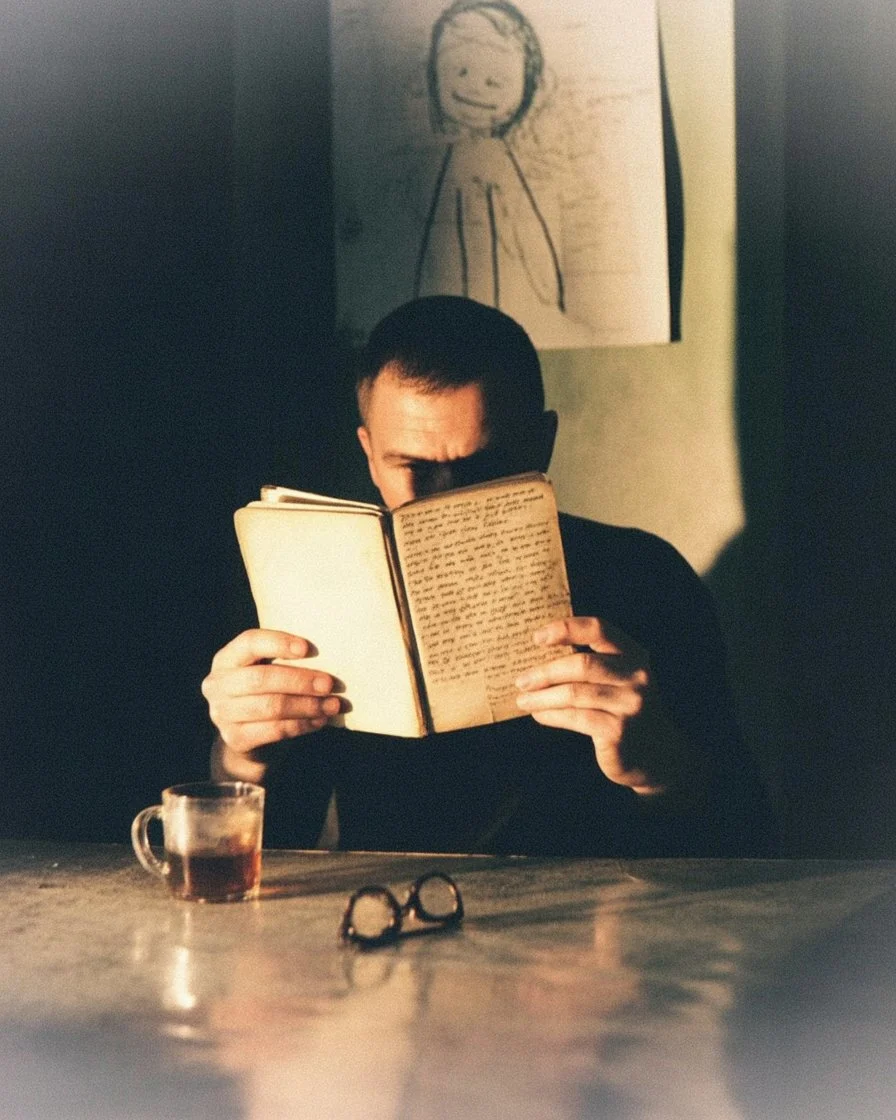
My most creative ideas emerge during administrative tasks—filing reports, updating spreadsheets, the mundane work that occupies just enough of my mind to quiet the anxious chatter but leaves space for unexpected thoughts to surface. When creativity isn’t demanded, it flows freely.
There’s a rhythm to monotony that unlocks something. The click of the keyboard, the scroll through endless rows of data, the mechanical sorting of documents—these acts ask so little of us that we can afford to wander. Not the aimless wandering of distraction, but the productive drift of a mind released from the tyranny of expectation.
Pressure to be creative kills creativity.
I’ve seen it happen in every creative job I’ve held, in every colleague who traded passion for profession. The moment we’re told to innovate, to be original, to produce something brilliant by Friday at 3 PM, something fundamental changes. Every idea arrives pre-judged. Is it clever enough? Original enough? Will it impress the client, the boss, the invisible audience we’ve constructed in our heads?
In jobs designated as “creative,” every thought becomes a performance before it’s even fully formed. We evaluate it against previous ideas, against industry standards, against the work of people we admire and people we envy. There’s an invisible panel of judges assembled in our consciousness, and they’re merciless.
But during routine work, thoughts emerge naked and unafraid. They arrive without the weight of professional expectations, without the fear that creativity will be found inadequate, without the anxiety that whispers: is this idea worth your salary?
Freedom creates when obligation constrains.
I’ve watched this paradox play out in the most unexpected places. The janitor at our office writes poetry during night shifts, his verses forming between the sweep of the mop and the emptying of trash bins. No one assigned him this work. No one evaluates his metaphors or critiques his line breaks. He writes because the quiet building and the repetitive tasks create a cathedral of possibility. His poetry has appeared in literary magazines. He’s never experienced writer’s block.
The accountant three floors up composes music during tax season. The most creative period of her year coincides with the most mundane—endless spreadsheets of numbers, deductions, calculations that require accuracy but not imagination. Her mind knows the work so well that it can perform it while simultaneously constructing melodies, building harmonies, hearing symphonies that exist nowhere but in the space between what she must do and what she chooses to create.
The security guard paints landscapes between his rounds. Every hour, he walks the same route, checks the same doors, scans the same empty hallways. And in the intervals, he captures on canvas the places he’s never been—mountains that exist only in his imagination, oceans he’s constructed from photographs and longing. His paintings sell at local galleries. He’s never felt the pressure to produce.
When creativity isn’t your job, it remains yours.
This is the heart of it. When we professionalize creativity, we surrender ownership. It becomes something we owe rather than something we possess. It transforms from gift to obligation, from discovery to deliverable. The thing we loved becomes the thing we’re measured by, and measurement changes everything.
The writer who becomes a content creator finds themselves staring at blank screens, calculating engagement rates instead of crafting sentences. The photographer who goes professional starts seeing every sunset through the lens of marketability. The musician who signs a contract discovers that inspiration now has deadlines, and joy has metrics.
Creative pressure transforms play into performance, and performance is exhausting in ways that play never is.
I think about the artists I know who quit their creative careers to take “regular” jobs, and how many of them found their creativity again in that surrender. The graphic designer who became a receptionist and started painting again. The journalist who took a job in data entry and finally finished his novel. The marketing director who became a warehouse manager and rediscovered why he loved photography in the first place.
They describe it the same way: relief. The weight lifting. The permission to create badly, to experiment, to fail in private, to make things that serve no purpose except the joy of making them.
There’s something profound happening in the spaces between obligation and possibility. Mundane work creates a particular kind of mental state—alert enough to complete the task, relaxed enough to wander. It’s not quite meditation, not quite flow, but something adjacent to both. A productive daydreaming. A focused drift.
Maybe this is why some of history’s greatest ideas arrived during walks, baths, or routine work. Einstein imagining relativity while working at a patent office. Darwin’s insights emerging during his methodical observations. The “eureka” moments that come not during intense focus but during the release that follows it.
The brain, it seems, needs both structure and freedom. It needs the scaffold of routine to build the architecture of creativity. Too much freedom and we drown in possibility. Too much structure and we suffocate. But that sweet spot—where our hands are busy and our minds are free, where we’re occupied but not overwhelmed—that’s where the unexpected thoughts arrive.
Why does requiring creativity kill it? Perhaps because true creativity is fundamentally playful, and play cannot be mandated. The moment we must play, it stops being play. The moment we must create, creation becomes labor. And while labor has its own dignity and value, it’s not the same as the electric joy of making something for no reason except that it insisted on being made.
What happens when we demand innovation on schedule? We get competence. We get adequacy. We get work that meets the brief, satisfies the requirements, checks the boxes. Sometimes we even get excellence. But we rarely get the strange, the surprising, the idea that couldn’t have been predicted because it emerged from a place deeper than strategy, more mysterious than planning.
And how do non-creative jobs accidentally create space for the most authentic creative expression? By removing the burden of expectation. By letting creativity be extra rather than essential, optional rather than obligatory, a gift we give ourselves rather than a service we provide others.
The janitor’s poetry is his. The accountant’s music is hers. The security guard’s paintings belong to him in a way that’s complete and uncomplicated. They create not because they must, but because they can. Not because it defines them, but because it delights them.
There’s wisdom in this paradox for all of us, whether we work in creative fields or not. Maybe the solution isn’t to abandon creative professions, but to protect within them some space for play. Some project that serves no client, some experiment that has no deadline, some creation that will never be evaluated or commodified or judged.
Maybe we need our own version of the janitor’s night shift—a time and space where we create not because we’re creative professionals, but because we’re humans who need to make things. Where the work doesn’t count, doesn’t matter, doesn’t mean anything except what it means to us.
Because in the end, the most creative ideas don’t arrive when we’re trying to be creative. They arrive when we’re busy with something else, when our guard is down, when we’ve stopped performing and started playing. They arrive in the margins, the intervals, the spaces between what we must do and what we choose to do.
They arrive, paradoxically, when we stop demanding they arrive at all.


Leave a thought