
Where No One Watches: How Art Is Built Alone
Hours of staring at blank pages, false starts discarded, wrestling with ideas that refuse to cooperate—the creative process is fundamentally solitary labor that others only see when it’s complete. The painter’s opening night reveals no evidence of the fifty attempts at capturing light, each abandoned canvas representing hours of effort that led nowhere. The published novel betrays nothing of the deleted chapters, the restructured plots, the characters who were written into existence only to be erased. The performance offers no trace of the private rehearsals where every gesture felt wrong, every note landed slightly off.
No one witnesses the doubt, the revision cycles, the moments of breakthrough that happen at 3 AM when the house is quiet and thought finally crystallizes into form. They see only the finished work, polished and confident, with no trace of the uncertainty that birthed it. The audience encounters art in its final state—resolved, coherent, seemingly inevitable. They don’t see the weeks spent pursuing a creative direction that ultimately proved fruitless. They don’t know about the paragraph that took three days to write, or the one that emerged fully formed in five minutes but represents years of unconscious preparation.
This invisibility of process creates a strange distortion in how creative work is perceived. People see the output and imagine it emerged naturally, easily, the way water flows downhill. They assume the finished quality of the work reflects the experience of making it—that good art comes from certainty and poor art from confusion. But the opposite is often true. The most assured final products frequently emerge from the most torturous processes, while work that came easily often lacks the depth that struggle produces.
The loneliness isn’t just physical isolation but psychological—carrying visions and half-formed ideas that can’t be shared until they’re complete. Living with imaginary characters, unfinished melodies, incomplete paintings that exist fully only in the creator’s consciousness. I walk around with entire worlds in my head that have no external reality yet. I know characters more intimately than I know some real people—understand their motivations, hear their voices, feel their emotional textures—but they’re ghosts until they’re written down, and even then they exist as ghosts that only future readers might eventually encounter.
There’s a peculiar form of haunting in being occupied by unfinished work. The story that needs writing, the painting that wants to exist, the song that keeps playing incomplete in your mind—these exert a gravitational pull on consciousness. They intrude during meetings, emerge during conversations, colonize the space between sleep and waking. You’re never fully present because part of you remains with the unfinished thing, trying to solve its problems, searching for its missing pieces.
This divided attention creates distance in relationships. You’re physically at dinner but mentally still in the scene you were writing that afternoon, trying to figure out what the character should say next. Someone asks you a direct question and you have to surface from the creative problem you were unconsciously working on, reorienting yourself to the actual present moment. The people close to you learn to recognize the distant look, the slight delay before you respond, the sense that some essential part of you is elsewhere.
When Happy asks what I’m working on, I struggle to explain the shapeless mass of possibility that might become a story. How do you describe something that doesn’t exist yet but also feels more real than most things that do? How do you convey the emotional weight of fictional events that haven’t been written? The creative process lives in internal space that external language can’t accurately describe. I could tell her the plot or premise, but that would be like describing a building by reciting its address—technically accurate but missing everything that matters.
What I’m actually working on is the feeling of the thing, the atmosphere, the emotional logic that will hold it together. I’m working on understanding why a character would make a particular choice, which requires understanding their entire psychology, their history, the web of values and fears that constitute their inner life. I’m working on the rhythm of sentences, the music of language, elements that operate below conscious thought and resist verbal explanation.
Trying to discuss work-in-progress often feels like breaking a spell. The ideas are fragile, tentative, and exposing them prematurely can kill them. There’s a superstition among many creators about not talking about projects before they’re finished, but it’s not really superstition—it’s recognition that unfinished work exists in a delicate state where external input can be destructive rather than helpful. The wrong question or comment can introduce doubt that derails the entire project. Or the act of explaining can dissipate the creative pressure that was driving the work, like opening a carbonated bottle and letting the fizz escape.
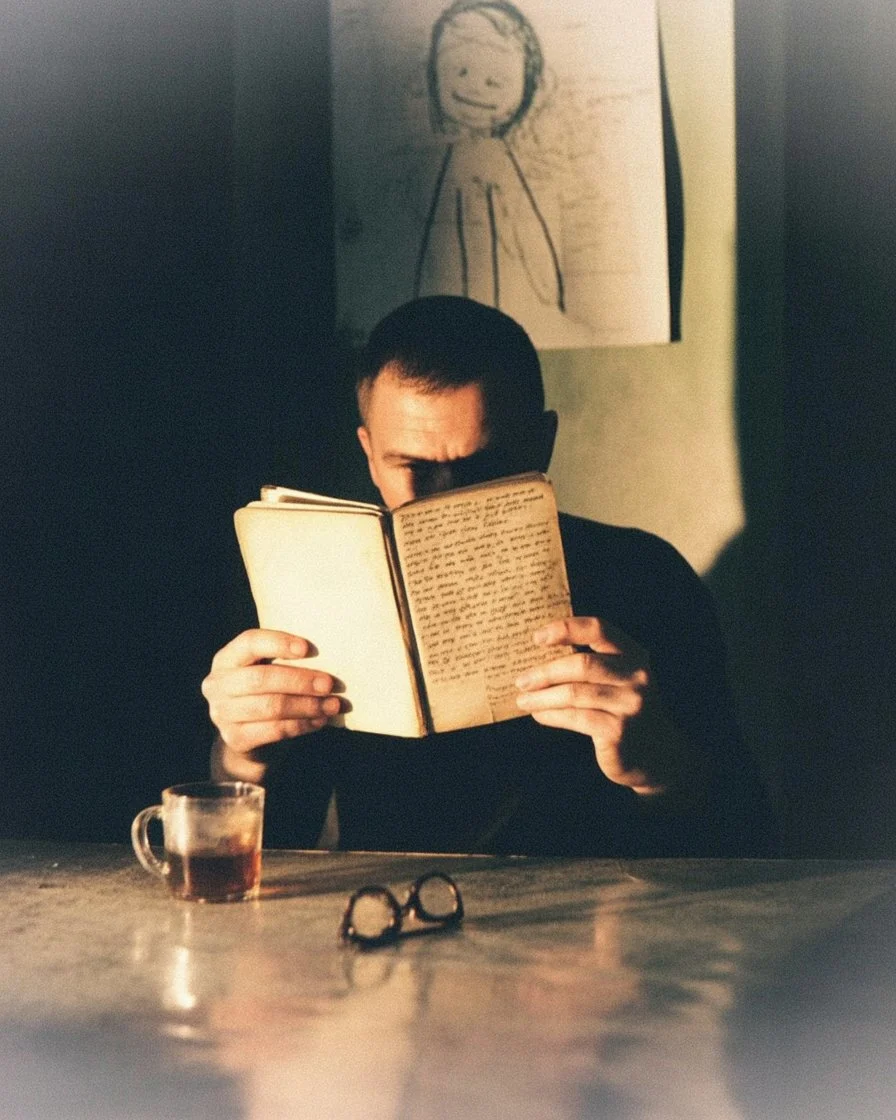
This isolation is both burden and necessity. Creation requires unshared time, private wrestling with inspiration, the freedom to fail without witnesses. You need the solitude to make mistakes that no one sees, to pursue dead ends without having to explain why you wasted time on them, to have ideas that sound ridiculous if spoken aloud but might lead somewhere interesting if explored privately. The presence of another person, even a supportive one, changes the nature of the work. You become partly performer, partly explainer, and the pure absorption that creation requires becomes impossible.
The studio, the writing desk, the practice room—these aren’t just physical spaces but psychological ones. They’re places where the social self can temporarily dissolve, where you don’t have to be the person others expect you to be. You can be grandiose one moment and despairing the next, can entertain ideas you’d never voice in public, can be consumed by questions that would seem neurotic if spoken aloud but are essential to the work. This is freedom, but it’s also exile—voluntary separation from the human world to commune with something that doesn’t yet exist.
But the solitude can become its own trap—working without feedback, doubt without reassurance, vision without validation. How do you know if what you’re making has any value if no one else encounters it? The internal compass can become unreliable after too many hours alone. What feels profound at 2 AM might be revealed as nonsense by morning light, but without outside perspectives, you can lose the ability to judge. The echo chamber of your own mind amplifies both brilliance and delusion, and you can’t always tell which is which.
There’s also the risk of disappearing too completely into the work. The person who emerges from days of intense creative isolation isn’t quite the same person who entered it. Something has been burned away in the process, something else has been discovered, and the social self needs reconstructing. You have to remember how to make small talk, how to care about normal concerns, how to inhabit the regular world after dwelling in imaginary ones.
The people closest to creators often become unwitting caretakers of this process—protecting the solitude, tolerating the absence, maintaining the practical world while the creator disappears into the impractical one. They learn when to intrude and when to leave alone, when to ask about the work and when to let it remain unspeakable. This is its own form of labor, this attending to someone who is only half present, and it rarely receives acknowledgment in the final work’s credits.
Perhaps every creative act requires someone to hold space for it—not just physical space but emotional and temporal space. Someone has to believe it matters, even when it’s invisible. Someone has to trust that all those private hours are leading somewhere, even without evidence. The creator may work in solitude, but true isolation—working with absolutely no one who believes in the work’s value—is almost impossible to sustain. We need at least one witness to our process, even if that witness only sees its effects: the closed door, the distracted gaze, the signs that we’re laboring toward something they can’t yet see.
The paradox is that we withdraw from human connection to create work that will ultimately reconnect us—art that will be shared, experienced, discussed. We endure the loneliness of creation because we believe the work will eventually live in community with others. But between the solitary making and the eventual sharing lies an abyss of time where the work exists only for us, and we must love it enough to continue despite having no proof that anyone else will find it valuable.
This is the hidden covenant of creative life: faith in unfinished things, commitment to invisible labor, belief that the hours spent alone will eventually yield something worth sharing. The finished work bears no scars of this process, but the creator carries them—marks from wrestling with visions that can’t be explained, only eventually revealed.

Leave a thought