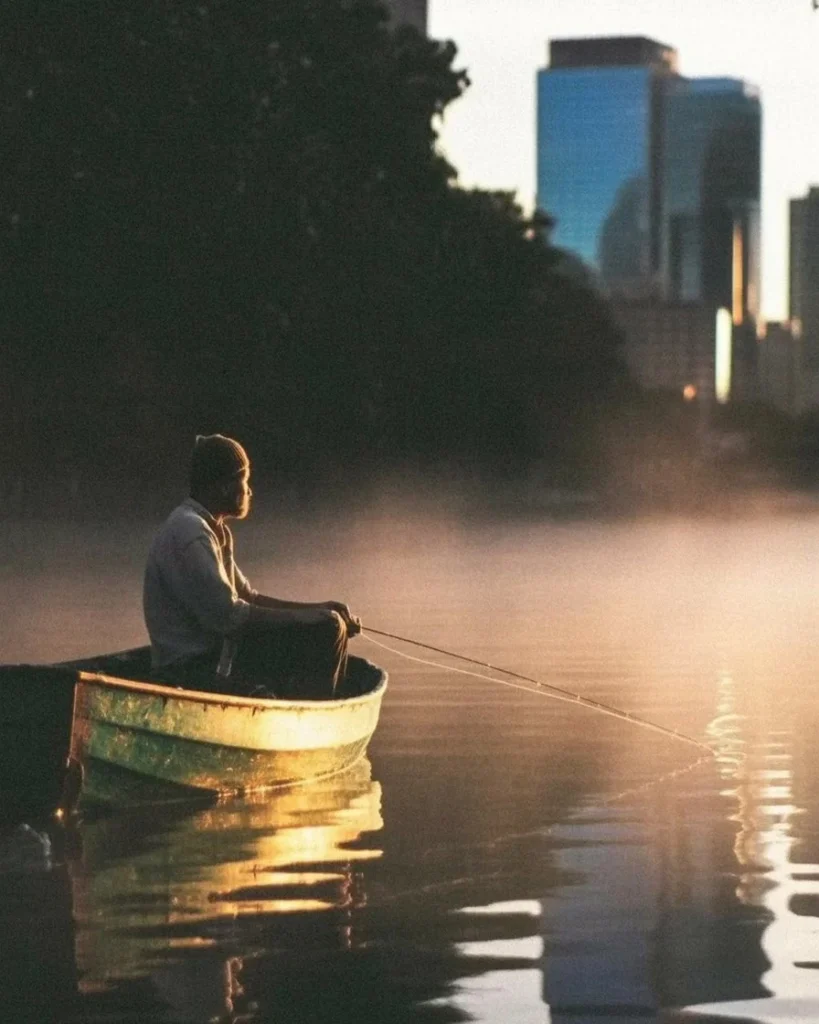
During Maghrib prayer, the ache started again.
I was halfway through the second rakat when it hit—this overwhelming longing for somewhere I’d never been. A place that felt more real than our Mirpur apartment, more familiar than these streets I’d walked for fifteen years.
After finishing, I stayed sitting on the prayer mat. Happy noticed.
“You okay?”
“Just… feeling strange.”
“Strange how?”
How do you explain homesickness for a place that doesn’t exist?
“Like I’m missing somewhere. But I don’t know where.”
She sat beside me. “The nowhere feeling?”
“You know it?”
“Everyone knows it. We just don’t talk about it.”
I’d been having this feeling more frequently lately. During sunset. During conversations with Happy about hypothetical futures. During dreams that left me waking with profound sadness for a place I’d somehow forgotten but deeply remembered.
It wasn’t wanderlust. I didn’t want to travel to Paris or Tokyo or some exotic destination. This was different—a yearning for a specific place that existed nowhere on any map. A home I’d never inhabited but somehow recognized.
“Where do you think it is?” Happy asked. “This place you’re missing?”
“I don’t know. Maybe it doesn’t exist. Maybe it never did.”
“Or maybe it exists differently. Not in geography but in… something else.”
That night I couldn’t sleep. The longing felt physical—an actual ache in my chest, like grief for something lost.
At 2 AM, I found myself looking at old photos. Childhood pictures from our village. My father’s house. Places I’d actually lived. But none of them were the place I was missing. The nostalgia was there, but not the recognition. Not the feeling of “this is where I belong.”
Arash found me the next morning still looking through photos.
“What are you doing, Baba?”
“Looking for something.”
“What?”
“I’m not sure.”
He climbed onto my lap, looked at the photos with me.
“Is that where you grew up?”
“Yes. But it’s not… it doesn’t feel like home anymore.”
“Where does feel like home?”
“That’s what I’m trying to figure out.”
Later that week, I watched Arash studying maps for his geography homework. His finger traced coastlines, mountain ranges, rivers. There was something in his eyes—not just academic interest but genuine hunger. Like he was searching for something specific but didn’t know what.
“Do you ever feel like you belong somewhere else?” I asked him.
He looked up, surprised by the question. Thought about it.
“Sometimes. Like there’s a place where everything would make sense. Where I’d fit perfectly.”
“You feel that too?”
“Yeah. Is that weird?”
“No. I think everyone feels it.”
“Have you found it? Your place?”
“Not yet.”
He went back to his maps, still searching.
That Friday, I mentioned it to my friend Rahim during Jummah prayers.
“You ever feel homesick for somewhere you’ve never been?” I asked.
He smiled. “You’re reading Rumi again, aren’t you?”
“How’d you know?”
“Because Rumi writes about exactly this. The soul’s longing for its divine origin. The drop missing the ocean. The separation from the Beloved.”
“You think that’s what it is? Spiritual homesickness?”
“Could be. We came from Allah, we return to Allah. Maybe the longing is just remembering where we actually belong.”
The Sufi explanation made sense intellectually. But it didn’t touch the actual feeling—this specific, almost physical yearning for a place with particular qualities I couldn’t name.
Happy and I talked about it over dinner that night.
“If money wasn’t an issue,” she asked, “where would you want to live?”
I thought about it. “I don’t know. Nowhere specific. That’s the weird part—it’s not about a real place. It’s about a feeling of place.”
“Describe the feeling.”
“Like… belonging. Complete belonging. Where the outside matches something inside. Where everything finally makes sense.”
“Paradise?” she suggested.
“Maybe. But also maybe something else. Maybe just being home in existence itself, instead of feeling like a visitor.”
Arash had been listening quietly. “Maybe the place is inside us. And we’re trying to find it outside.”
We both stared at him.
“What?” he said. “That’s what my teacher said about happiness. That it’s inside not outside.”
“Your teacher’s smart,” Happy said.
But was it true? Was this longing for an internal state misidentified as external geography?
I thought about when the feeling was strongest. Not during unhappy times—during happy ones. When Happy was healthy, when Arash was thriving, when work was manageable. That’s when the ache intensified.
As if contentment here reminded me of greater contentment elsewhere. As if temporal happiness pointed toward eternal happiness that felt like returning, not arriving.
One evening, I asked Happy, “Do you think we knew this place before we were born? And we’re trying to get back to it?”
“Like pre-existence memory?”
“Something like that.”
She thought about it. “Islamic teaching says souls existed before bodies. Maybe we’re remembering that state.”
“But souls didn’t have geography. They existed with Allah, not in a place.”
“Maybe that’s the point. We’re homesick for a state of being, not a location. But we experience it as longing for place because that’s how humans understand belonging—spatially.”
The next day at work, I couldn’t focus. The longing had become so intense it felt like physical illness. My colleague Nabeel noticed.
“You look miserable.”
“Just thinking.”
“About what?”
“Home. Or the idea of home. Or whatever home is supposed to be.”
Nabeel laughed. “You’re having an existential crisis in the middle of Monday?”
“Apparently.”
“Want my immigrant perspective? I’ve lived in four countries. Know what I learned? Home isn’t a place. It’s a time. It’s when you felt most yourself, most safe, most loved. And we spend our lives trying to recreate that time, but we can’t. So we think we’re homesick for a place, but we’re actually homesick for a moment.”
“What moment?”
“Different for everyone. For me? Being eight years old in my grandmother’s kitchen. That feeling of absolute safety and love. I’ve never felt it since. And I keep thinking if I just find the right place, I’ll feel it again.”
“And?”
“And I never do. Because it’s not about place. It’s about being eight years old and having my grandmother alive and feeling like the world was safe.”
After work, I walked home slowly, thinking about Nabeel’s words. Was I chasing a moment disguised as a place? A time when everything felt right, before I understood that nothing stays right?
That night during Isha prayer, the longing was almost unbearable. But this time I didn’t fight it. Just acknowledged it. Let it exist.
After finishing, Happy asked, “Still feeling it?”
“Yes. But differently. Less like I’m missing something and more like… I’m being called toward something.”
“Maybe that’s what it is. Not memory but invitation.”
“Invitation to what?”
“To keep searching. To keep growing. To keep moving toward whatever completion looks like.”
Arash came out of his room. “Can’t sleep.”
We sat together, the three of us, in comfortable silence.
“Baba, did you figure out where home is?” Arash asked.
“No. But I think maybe that’s okay. Maybe home isn’t somewhere we find but somewhere we’re moving toward. Maybe the longing is the compass.”
“Like we’re heading there but not there yet?”
“Exactly like that.”
He seemed satisfied with this answer. Went back to bed.
Happy and I stayed up.
“Do you think we’ll ever find it?” she asked. “The place we’re homesick for?”
“I don’t know. Maybe we do, eventually. After death, after whatever comes next.”
“Or maybe we already have it and don’t recognize it. Maybe home is right here and we’re too busy longing to notice.”
“You think this is home? Mirpur? This apartment?”
“No. I think home is us. The three of us. And we keep looking elsewhere because we don’t trust that it could be this simple.”
I thought about that. About Arash sleeping in the next room. About Happy beside me. About this ordinary life we’d built.
Was this home? Was I missing it while searching for something grander?
“Maybe you’re right,” I said. “Maybe the longing isn’t for somewhere else but for being fully present here.”
“Or maybe both,” Happy said. “Maybe we’re meant to long for paradise while loving the earth. To be homesick for the eternal while building homes in the temporal.”
That felt true. The paradox of being human—belonging fully to neither world, stretched between earth and heaven, present and absent simultaneously.
The ache didn’t disappear. But it changed quality. Less painful, more purposeful. Not wound but compass. Not problem but guidance.
This longing for nowhere—maybe it was keeping me searching. Keeping me from settling too comfortably into this world. Reminding me that this life, however good, was temporary. That true home was still ahead, still waiting.
Or maybe Happy was right, and home was right here. And the longing was just teaching me to appreciate it while it lasted.
Either way, the homesickness would continue. The yearning for the place that exists only in the intersection between memory and imagination, between earth and heaven, between now and forever.
And maybe that was okay. Maybe we were meant to live between, stretched toward something we couldn’t name, pulled by longing we couldn’t satisfy.
Homesick for nowhere. Heading home anyway.
Following the ache like a compass pointing toward whatever completion looks like—whether it’s a place, a time, a state of being, or just the moment when longing finally ends and we arrive at whatever we’ve been searching for all along.