The call came on a Tuesday.
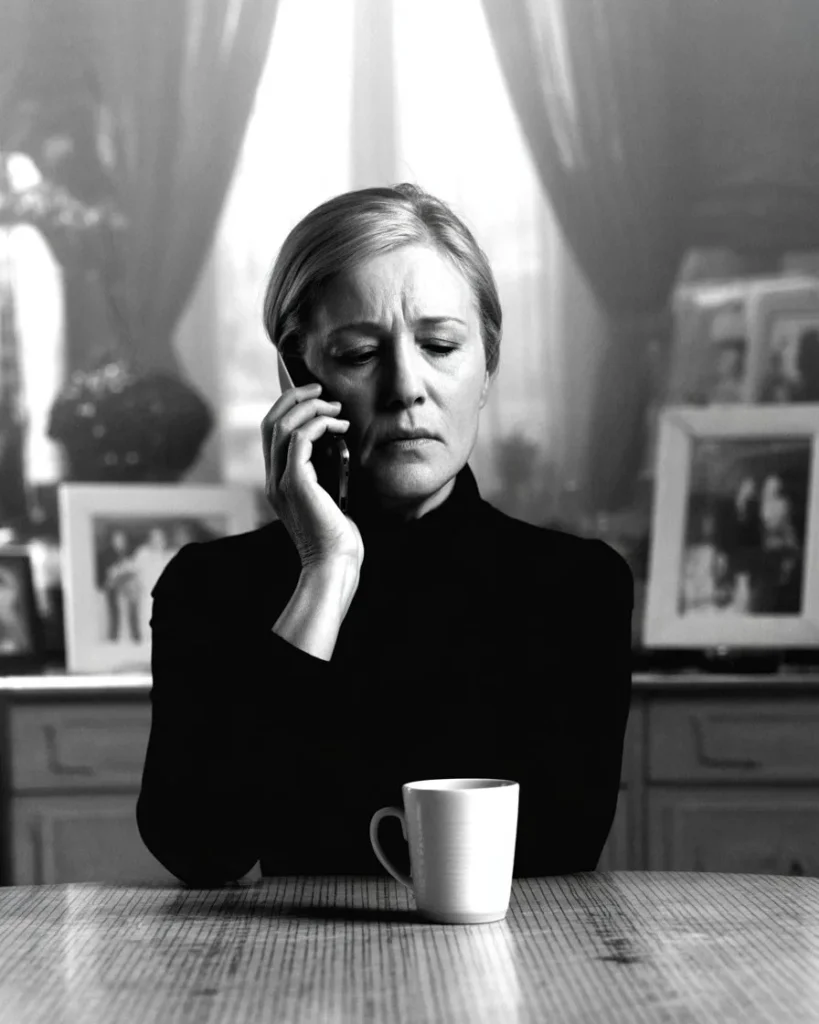
The numbers on the screen had been going the wrong way for weeks, but Tuesday was when it became real. I sat at the kitchen table for a while after hanging up. My wife came in, saw my face, and put the kettle on without asking anything.
I called my friend that evening.
His mother had died six months earlier. Cancer. Losing a mother to cancer is its own kind of wound — slow at first, then suddenly total. He had gone quiet after that — not angry-quiet, just absent. Like a radio that still had power but nothing coming through. Everyone around him had ideas about how to comfort someone in that state, but most of it landed wrong. Too neat. Too fast. The loss and grieving process doesn’t move in a straight line. Sometimes it circles. Sometimes it stalls entirely.
“How are you handling it?” he asked.
“Making dua. Trusting that Allah has a plan.”
Silence. Then: “We’ll see.”
“See what?”
“If it holds.”
I didn’t ask him to explain. I already understood.
The next morning I prayed Fajr and felt nothing. Not despair — just nothing. Feeling empty during prayer is something nobody warns you about. The words came out. My forehead touched the floor. I sat there after finishing and looked at the pattern on the prayer mat. Little diamonds repeating.
My wife was already awake.
“How did you sleep?”
“Fine,” I said.
She looked at me. Didn’t say anything else.
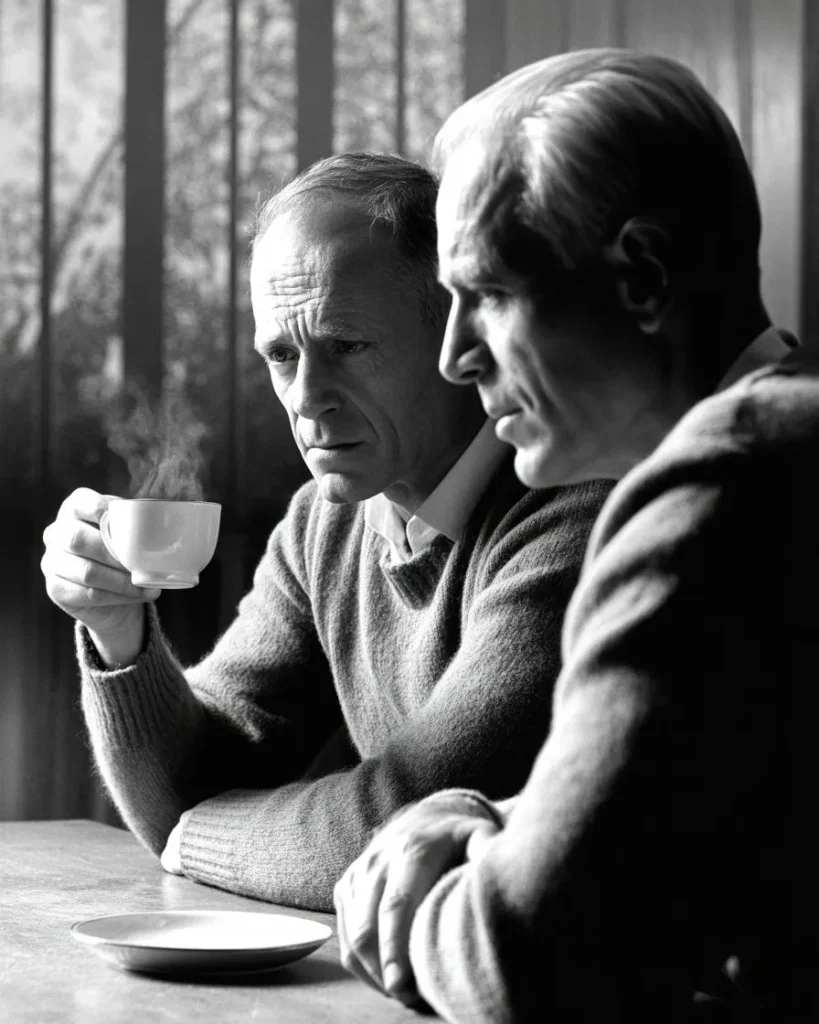
We met for coffee that week. He stirred his cup without drinking it.
“My mother used to pray tahajjud every night,” he said. “Even when she was on the medication. Even when she could barely sit up.”
“I know.”
“And then she died.” He put the spoon down. “So.”
I told him the situation was bad. That I might lose everything I had built. That I was trying to stay calm.
“You’re not calm,” he said. “Your leg is shaking.”
I hadn’t noticed. I put my hand on my knee.
“I’m trying,” I said.
“I know you are.” He looked out the window. A woman outside was trying to fold a stroller with one hand while holding a baby with the other. We both watched her. “That’s what I want to see. Whether trying means something. Whether it does anything.”
He wasn’t being cruel. He was asking a real question. Part of the loss and grieving process — for believers especially — is this: not just mourning the person, but testing whether the things you believed still hold. Bereavement and loss can hollow a person out in ways that take years to name.
I didn’t have an answer.
My wife said it that night.
“You’ve been strange lately.”
“I’m worried. Naturally.”
“No. Not that.” She folded a shirt and set it down. “You’re cheerful in a way that doesn’t fit your face.”
“I’m trying to have faith.”
“You’re performing it.” She picked up another shirt. “For him. I’ve noticed. Whenever he calls, you get a certain voice.”
“That’s not—”
“It is.” She wasn’t angry. Just clear. “You can do what you want. I’m just telling you what I see.”
The financial situation got worse before it plateaued. For a while I checked my phone too often — first thing in the morning, last thing at night, between prayers. Looking for news that would make the numbers change. They didn’t change.
I stopped sleeping well. My wife would wake up and find me at the kitchen table with tea gone cold in front of me.
“Come to bed,” she’d say.
“In a minute.”
She would go back. I would sit there a bit more. Then go.
My friend came to the house one evening. First time in months. He stood at the door with two cups of takeaway tea, slightly awkward, like he wasn’t sure he’d done the right thing by coming.
We sat in the small room at the back. The one that gets the evening light.
He asked how things were going.
“Alhamdulillah,” I started.
He raised an eyebrow.
I stopped. Started again.
“I don’t know how things are going. It could go either way. I’m scared most of the time. I pray and sometimes it helps and sometimes it doesn’t and I pray again anyway.”
He nodded slowly. “That’s the first honest thing you’ve said to me in weeks.”
“You don’t have to perform for me,” he said. “I’m not keeping score.”
“You said ‘we’ll see.'”
“I know what I said.” He wrapped both hands around his cup. “But I didn’t mean I wanted you to pretend. I meant — I wanted to see what was real. What actually happens to a person who believes, when things fall apart.”
Outside, a car went past slowly, its headlights moving across the wall.
“And?” I said.
“You’re falling apart.” He said it simply, not as criticism. “But you’re still here. Still praying. Still talking to me.” He looked at his cup. “That’s different from what I expected.”
The khutbah that Friday was not about anything particular — community matters, the usual reminders. But the imam said one thing that stayed with me.
He said people watching believers during difficulty are not looking for proof of God. They are looking to see if it is possible — to hold pain and still not let go. To be afraid and still face the day. Coping with grief — real coping with grief — doesn’t look like peace from the outside. It looks like showing up anyway. Faith during hardship is not the absence of fear. It is fear, carried forward.
He said: you are not responsible for making faith look easy. You are responsible for making it look true.
I wrote nothing down. I just sat with it.
A few weeks later, my friend came again. Evening again. Same room.
He sat quietly for a while. Then:
“When your mother died. Did you ever get angry at Allah?”
“Yes.”
“But you still believed.”
“Yes.”
He was quiet for a long time after that.
“I’ve been angry,” he said finally. “Since she died. And everyone kept saying — have patience, it’s Allah’s will, she’s in a better place. And I wanted to — I don’t know. I wanted to break something.”
“That’s okay.”
“People kept saying it wasn’t.”
“They were wrong.”
He looked at me. “The prophets—”
“They argued with Allah,” I said. “They begged. They wept. Musa AS was so angry once he threw down what he was carrying. These are people Allah chose, and they were not calm. They were just honest.”
Something shifted in his face. Not resolution. More like — the easing of something that had been held very tight.
What he had been carrying was complicated grief — not the clean kind, the kind with tidy stages of grief and timelines, but the kind that tangles love and fury and spiritual struggle into something that has no name. For months his crisis of faith had disguised itself as silence. He had spent all that time believing his anger and faith could not exist in the same place.
“I’ve been telling myself that anger meant I’d lost faith,” he said. “That if I was angry at Allah, it meant I didn’t believe.”
“You can only be angry at someone who exists,” I said. “You can only be angry at someone you thought would do differently. The anger was always faith, just broken.”
He didn’t say anything for a while.
We sat there as the room got darker. Neither of us turned on a light.
He started coming to Jummah again. He didn’t announce it. He was just there one Friday, in the row behind me. I didn’t look back. I didn’t want to make it into something.
Afterward, walking out, he caught up to me.
“I wasn’t ready,” he said. “But I came anyway.”
“That’s enough.”
He nodded. We walked to the car park together. A cat was sitting on a low wall, watching the street with complete indifference.
My financial situation did not resolve. There were some weeks better than others. There were phone calls I dreaded. There was a night I sat on the bathroom floor for half an hour not doing anything in particular. My wife knocked and I said I was fine and she said okay and I heard her sit down on the other side of the door and stay there without saying anything, which was its own kind of answer to something.
He called late one night.
“I made dua today.”
“First time in a while?”
“Six months.”
I waited.
“I told Allah I’m still angry. That I don’t understand why she had to go like that. That I’m not ready to fully accept it. But that I’m here. Trying. And that I need help to keep trying.”
Some people call this the bargaining stage of grief. Maybe. But it felt less like negotiating and more like honesty — both hands open, nothing hidden. That is what sabr and tawakkul actually look like, I thought. Not serenity. Not resolution. Just continuing, without guarantees.
Outside my window, the street was empty. A single streetlight making a yellow circle on the wet pavement.
“Is that enough?” he asked. “To just say that?”
“I think so,” I said. “I don’t know for certain. But I think so.”
He said good night. I sat by the window for a bit after.
The tea on the table had gone cold again. I didn’t drink it.
The numbers were still bad. The prayers were still hard some mornings. Some mornings they were not hard.
The loss and grieving process — his, mine, in its different shapes — had not ended. Maybe it doesn’t end. Maybe emotional healing is not a destination but something that happens in small, unannounced moments: a dua at midnight, a friend at the door with tea, a wife sitting on the other side of a closed door in the dark.
My friend was watching. That part was still true.
But watching for what — I wasn’t sure anymore. Maybe not to see if faith works. Maybe just to see if it is possible to keep going without knowing if it works. Finding peace after loss, if it comes at all, probably looks less like resolution and more like this. Two people in a darkening room. Neither turning on the light. Still there.
The loss and grieving process asks this of you, in the end: not to have answers, but to remain.
Maybe that is the same question.
Maybe not.