
“Baba, where does Allah live?”
Arash asked this over breakfast, and I froze with my coffee cup halfway to my mouth.
My eleven-year-old son sat there, waiting for an answer like I was Google or something. Like fathers are supposed to have definitive answers to questions about the divine.
“What made you think of that?” I asked, buying myself some time.
“Rafi said Allah lives in the sky. But then Tahmid said that’s stupid because Allah is everywhere. So where exactly?”
Exactly. My son wanted GPS coordinates for God.
I opened my mouth to give him an answer—something theological, something that would sound parent-like and wise. But sitting there, looking at Arash’s face, I realized: I don’t know. Never knew. Might never know.
And weirdly, that felt like relief instead of failure.
“That’s a really good question,” I said slowly. “I don’t think I have an answer.”
Arash looked disappointed. “But you’re supposed to know things.”
“Maybe some questions don’t have answers. Or maybe the question itself is the important part.”
“That’s what teachers say when they don’t know something.”
I laughed. Kid’s too smart for his own good.
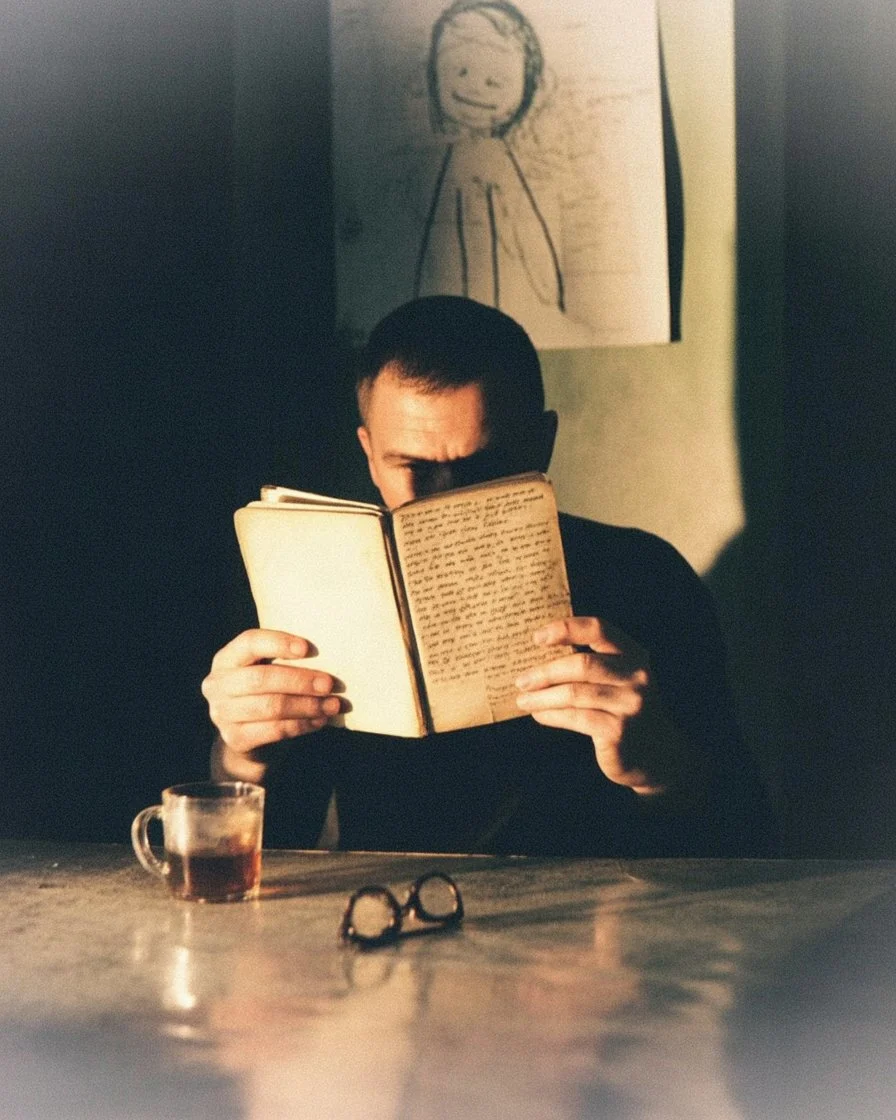
For thirty-something years, I’ve been treating mystery like a problem that needs solving. Every big question—about God, about life, about death, about consciousness—I’ve approached like a puzzle. Read the right books, think hard enough, pray properly, and eventually the answer would click into place.
When Amma died two years ago, I’d driven myself half-crazy searching for why. Why her? Why that way? Why then? Read every Islamic text I could find about divine wisdom, about tests of faith, about the afterlife. Talked to imams, to friends, to anyone who might have an explanation that would make the loss make sense.
Everyone had answers. “It’s Allah’s plan.” “She’s in Jannah now.” “This is your test.”
But none of those answers touched the actual grief. None made me miss her less. The explanations were like putting band-aids on the wrong wound.
I remember Happy finding me at 2 AM in Amma’s empty apartment, just sitting in the dark surrounded by her things.
“What are you doing?” she’d asked.
“Trying to understand.”
“Understand what?”
“Why. How. What it all means.”
Happy had sat beside me quietly. Then she’d said, “Maybe it doesn’t mean anything beyond what it is. Maybe trying to understand is making it harder.”
I’d been angry at that. How could Amma’s death be meaningless? There had to be divine wisdom, some larger purpose.
But now, two years later, sitting across from Arash and his impossible question, I think Happy was right. Not that Amma’s life was meaningless—her life meant everything. But maybe her death doesn’t need to fit into some grand theological framework. Maybe loss is just loss, and trying to solve it like a riddle only adds suffering to suffering.
“Baba, you’re doing that staring thing again.”
Arash’s voice pulled me back.
“What thing?”
“That thing where your eyes are open but you’re not actually here.”
“Sorry. Thinking.”
“About Allah?”
“About questions. About not having answers.”
He considered this while eating his cereal. Then: “Is it okay to not know?”
“Yeah. I think it might be better than pretending to know.”
My friend Rahim would have had an immediate answer for Arash. Rahim found certainty a few years ago, became much more religious. Prays five times a day, reads Quran daily, seems peaceful in a way I’ve never managed.
Last week over chai, he’d told me, “I stopped questioning everything. Started accepting. Life got simpler.”
“Don’t you miss the questions?” I’d asked.
“No. Questions were torture. Answers are peace.”
Maybe for him. But I’m starting to think the questions are my companions now. Old friends who show up uninvited but whose presence I’ve learned to appreciate.
That evening, Arash was doing homework when he suddenly looked up.
“Baba, I think I figured it out.”
“Figured what out?”
“About Allah. Maybe Allah lives in the wondering. Like when I ask where Allah is, that’s when I’m thinking about Allah. So maybe that’s where Allah is.”
I stared at my eleven-year-old son, who’d just articulated something I’d been circling around my entire adult life.
“That’s actually brilliant, Arash.”
“I know,” he said, completely unbothered by modesty, and went back to his math.
I sat there thinking about all the mysteries I’ve spent decades trying to crack. Where consciousness comes from. Whether prayers are heard. Why suffering exists. What happens after death. The meaning of everything.
Treated each one like a code waiting to be broken, an equation needing solution. Read philosophy, theology, science—always searching for the final answer that would make everything clear.
But maybe I’ve been approaching it wrong this entire time.
Maybe mystery isn’t broken understanding waiting to be fixed. Maybe it’s just the nature of certain things. Maybe the limitation isn’t in my comprehension but in expecting everything to yield to human logic.
Even with Happy, after fifteen years of marriage, she’s still mysterious to me. I’ll watch her reading, wonder what she’s actually thinking, realize I can never fully know. Even when she tells me, I’m getting her translation of her experience, not direct access to it.
That used to frustrate me. Felt like we weren’t close enough. If we were truly intimate, shouldn’t I know everything?
But lately I’ve been thinking: maybe the mystery is the intimacy. Maybe knowing everything would kill the wonder that keeps love alive.
“What are you smiling about?” Happy asked, coming out from the bedroom.
“Just thinking about mystery.”
“Oh no. Not another existential crisis.”
“No, actually the opposite. I think I’m making peace with not knowing.”
“About time. Only took you forty years.”
She’s right. Forty years of fighting the unknown, trying to force clarity where ambiguity lives naturally.
When I pray now—which is irregular, inconsistent, nothing like my father’s disciplined five-times-daily practice—I’m not trying to solve the mystery of Allah. Not looking for proof or signs or definitive answers.
I’m just participating. Creating space for something larger than my understanding. The prayer doesn’t explain anything. But explanation isn’t the point anymore.
“Baba,” Arash called from the dining table. “How do you know if your math is right?”
“Check the answer key in the back of the book.”
“But what if there’s no answer key?”
“Then you do your best and accept you might be wrong.”
“That sounds scary.”
“It is. But it’s also kind of freeing.”
That night, after Arash went to bed, I stood on our balcony looking at Dhaka’s light-polluted sky. Can barely see stars anymore, but I know they’re there. Billions of them, most of which we’ll never understand.
All that vastness. All that mystery.
For decades that felt like burden—like I was supposed to figure it all out, supposed to have answers.
Tonight it felt peaceful.
I don’t know where Allah lives. Don’t know why Amma died when she did. Don’t know what consciousness is or why love feels the way it does or what happens after we die or whether any of my beliefs are actually true.
And finally, that’s okay.
The mystery isn’t a problem to solve. It’s reality to inhabit. Not a wall blocking my path but a door opening into larger space.
Happy came out to join me. “Still thinking?”
“Always. But differently.”
“How?”
“I’ve been treating mystery like something broken. But maybe mystery is just how some things are. Not broken. Just mysterious.”
“Took you long enough to figure that out.”
She was smiling though.
We stood together quietly. Fifteen years of marriage, we’ve learned some moments are better lived than explained.
Inside, Arash slept peacefully, unburdened by existential questions for at least a few hours. Tomorrow he’ll probably have more impossible questions. Where did the universe come from? Why do people fall in love? Why do we have to die?
And I’ll tell him: I don’t know. Let’s wonder together.
Maybe that’s the answer he was looking for all along. Not coordinates for the divine, but permission to wonder. Permission to live inside mystery without needing to solve it.
The relief I feel isn’t from finding answers. It’s from releasing the expectation that I should have them. From accepting that some things are meant to be experienced rather than explained, lived rather than understood, wondered about rather than figured out.
Allah lives where Allah lives. Amma is wherever she is. Consciousness exists however it exists. Love works the way it works.
And that’s enough.
More than enough.
It’s everything.


Leave a thought