
The illusion of being busy to avoid real life and self-reflection.
I have perfected the art of urgent emptiness. My calendar blooms with commitments that feel essential but accomplish nothing, meetings that could be emails, emails that could be silence. I rush from task to task like a performer in an elaborate dance, moving with purpose toward destinations that don’t actually exist.
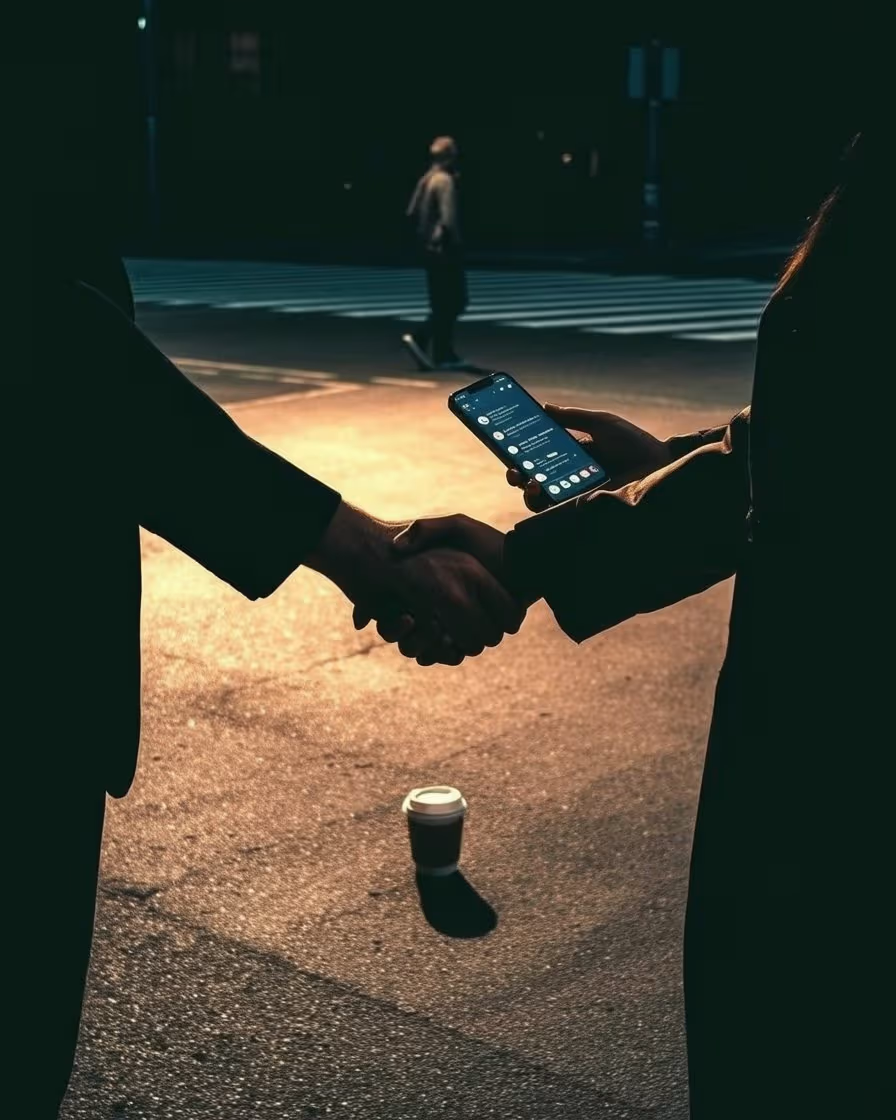
This morning I caught myself checking my phone every thirty seconds—not for anything specific, but for the momentary relief of distraction, the brief escape from the weight of being present in my own life. The phone buzzed with notifications about things that don’t matter, and I responded with the gratitude of a drowning person grabbing driftwood.
When did busyness become our most acceptable form of hiding?
We’ve created a culture where constant motion substitutes for meaningful direction, where being overwhelmed is a badge of honor rather than a symptom of avoidance. We compete over who has less time, as if scarcity of moments proves the value of our existence. But scratch beneath the surface of all this urgent activity, and you often find the same thing: a person running from the uncomfortable work of actually living.
Because living—real living—requires us to sit still long enough to feel what we feel, to face what we’re avoiding, to make choices based on what we actually want rather than what keeps us too busy to want anything at all. Living means risking disappointment, embracing uncertainty, confronting the gap between who we are and who we pretend to be.
It’s easier to be busy. Busy is safe. Busy is socially acceptable. Busy creates the illusion of progress while actually maintaining the status quo. When someone asks how you’re doing, “busy” is always an acceptable answer—it suggests importance, engagement, a life full of obligations that matter to someone, somewhere.
But observe what we’re actually busy with. The endless scroll through social media. The reorganization of things that don’t need reorganizing. The pursuit of productivity for productivity’s sake. The manufacture of problems to solve so we don’t have to address the problems that actually need solving.
We schedule ourselves into exhaustion not because our lives are so rich with meaningful activity, but because meaningful activity requires us to slow down enough to identify what meaning looks like, and that identification process forces us to confront truths we’ve been successfully avoiding through motion.
I think of the moments when busyness failed me—when illness forced stillness, when a crisis demanded presence, when love required attention that couldn’t be multitasked. In those moments, stripped of the comfortable distraction of constant doing, I had to face the uncomfortable question: what was I so busy avoiding?
Usually, it was myself. The parts of me that needed attention, healing, honest acknowledgment. The relationships that required difficult conversations. The dreams that demanded courage. The changes that scared me. The present moment that felt too heavy to carry without the buffer of distraction.
The tragedy isn’t that we’re too busy—it’s that we use busyness to avoid the very experiences that make life worth living. We’re so afraid of boredom that we never discover what emerges from stillness. We’re so committed to doing that we forget the art of being.
My son doesn’t know how to be busy yet. He can sit and watch clouds, study ants, daydream without agenda. He hasn’t learned that stillness is dangerous, that presence is risky, that being unavailable to distraction might mean becoming available to what actually matters.
But I’m teaching him, inadvertently, through my own performance of urgency. I’m showing him that important adults are always rushing, always checking phones, always having somewhere else to be. I’m modeling the choreography of escape without meaning to.
Tonight I want to try something revolutionary: nothing. Not productive nothing, not busy nothing, but actual nothing. I want to sit with whatever emerges when the motion stops, when the distractions end, when there’s nowhere to hide from the simple fact of being alive, being here, being me.
Because maybe the life I’m so busy avoiding is actually the life I’ve been unconsciously seeking. Maybe all this motion has been circling around a stillness I’m afraid to enter—the stillness where real choices get made, authentic desires get acknowledged, and the person I actually am gets to finally meet the person I’ve been pretending to be.
The dance of busyness is exhausting, but at least it’s familiar. The question is: what happens when the music stops and we have to face the silence we’ve been dancing away from?
Maybe that’s where life actually begins.

Leave a thought