
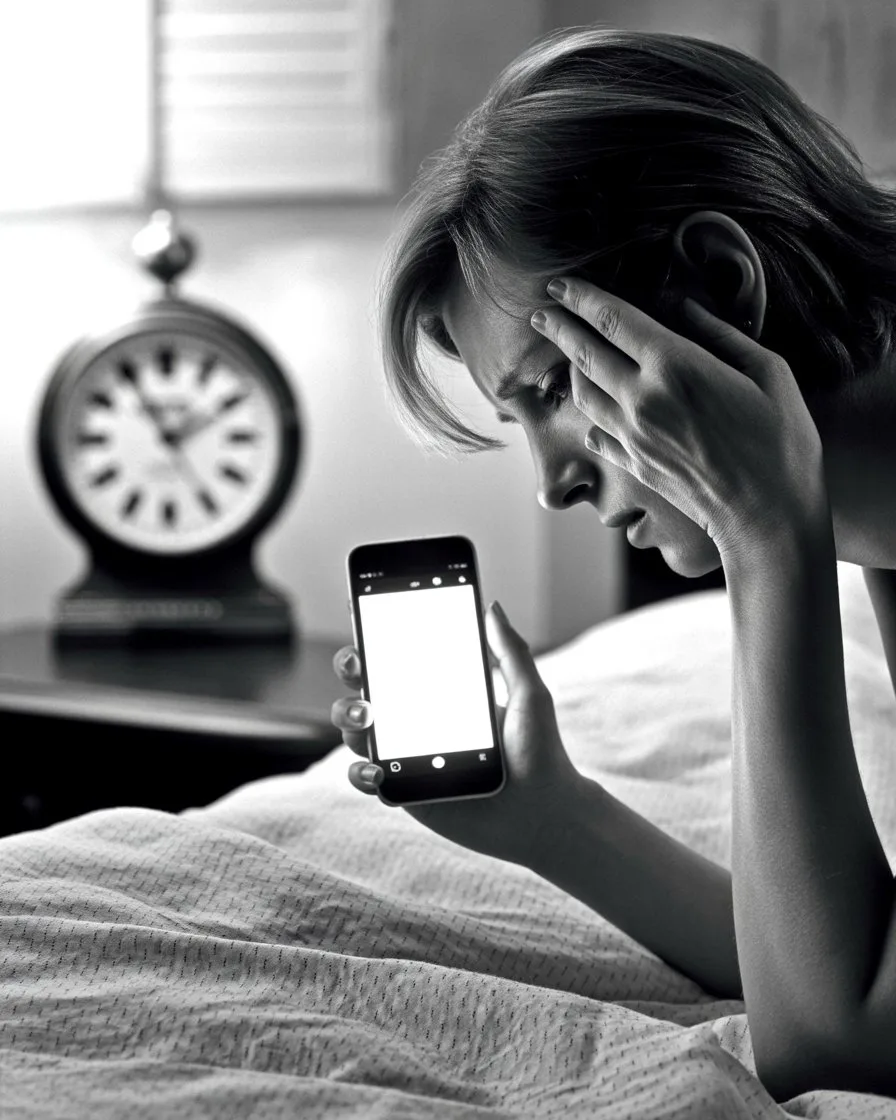
I reached for my phone before my eyes were fully open, muscle memory guiding my thumb to the illuminated rectangle that would flood my half-conscious mind with other people’s thoughts, other people’s problems, other people’s lives—anything to avoid the discomfort of being alone with my own thoughts for even thirty seconds.
The realization hit during a moment when my wifi failed and I found myself frantically checking the same apps that wouldn’t load, tapping the screen like a lab rat pressing a button that no longer dispensed rewards. I was an addict seeking a fix, and my drug was the endless stream of information, entertainment, and artificial urgency that kept me safely distant from whatever was happening in my actual life.
When did I become afraid of my own thoughts? When did silence become so threatening that I needed constant noise to feel safe? When did boredom become an emergency requiring immediate intervention rather than a space where something new might emerge?
I had trained myself to flee the present moment with the efficiency of someone escaping a burning building. Uncomfortable feeling? Check Instagram. Difficult decision? Watch videos. Moment of uncertainty? Scroll through news. Any pause in external stimulation became an opportunity to reach for the reliable distraction that lived in my pocket.
The phone had become my emotional support animal, my security blanket, my escape hatch from the demanding reality of being present in my own life. It offered infinite worlds to visit whenever my world felt too small, too boring, too difficult to inhabit fully.
But the constant escape was also a constant evacuation—fleeing not just from discomfort but from the possibility of peace, insight, creativity that might emerge from simply being still. I was running away from anxiety but also from inspiration, avoiding pain but also missing joy, escaping boredom but also abandoning the fertile emptiness where new ideas are born.
The addiction wasn’t really to the device but to the state of being elsewhere, always elsewhere, never quite here. The phone was just the delivery mechanism for my deeper addiction to avoiding the present moment, to being someone other than myself, to living anywhere except where I actually was.
Recovery meant learning to tolerate the discomfort of presence, to sit with thoughts I’d been avoiding, to feel feelings I’d been medicating with information. It meant discovering that boredom wasn’t an emergency and silence wasn’t a threat, that my own mind was actually a place I could inhabit rather than a place I needed to constantly flee.
Tonight I want to practice the radical act of doing nothing, of being here without enhancement or distraction, of meeting whatever emerges from stillness with curiosity rather than immediately reaching for the escape device that promises relief but delivers only the need for more relief.


Leave a thought