
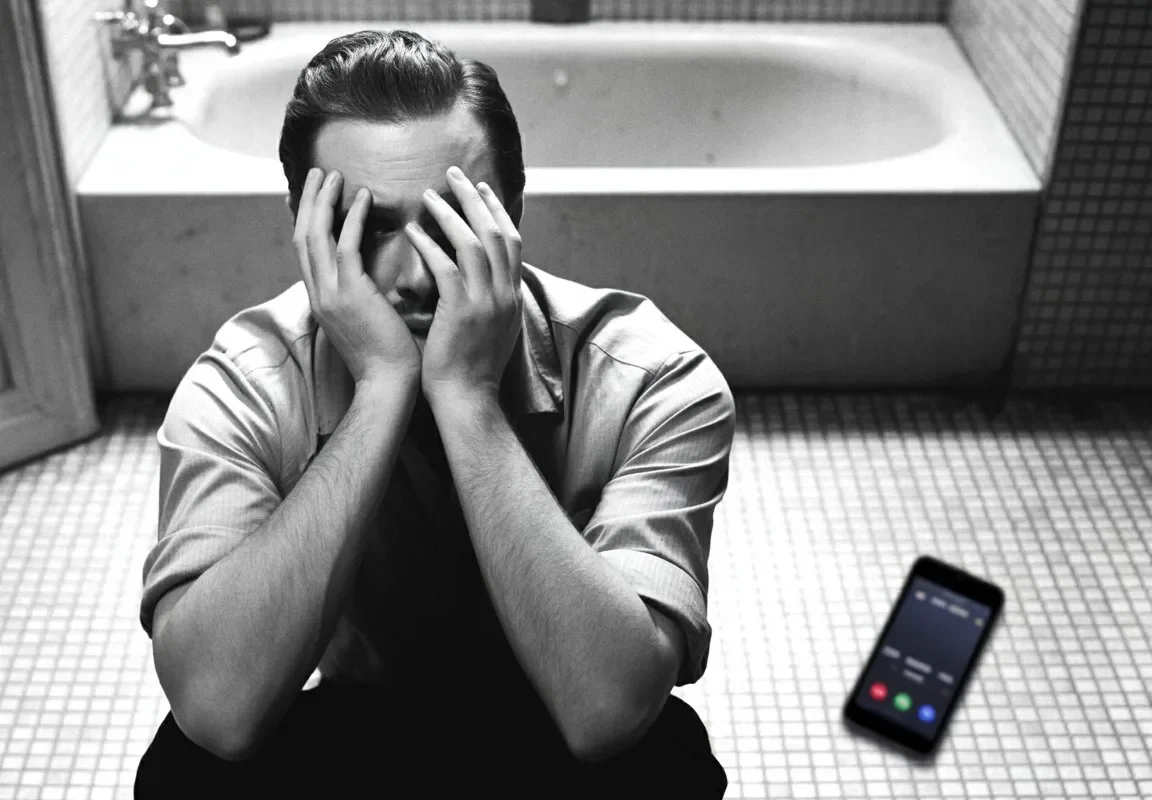
Sad and Alone: The Loneliness Nobody Admits
There is a specific kind of sad and alone that nobody warns about — not the loneliness of an empty room, but the loneliness of being the only witness to a moment that changed everything.
Memory is not a shared thing. It never was. Two people standing in the same room are living in completely different universes — and the tragedy is not that this is true, but that people spend entire lifetimes refusing to accept it.
A man watches his father’s eyes change. A woman listens to a doctor’s words. Same room. Same moment. Two separate realities. And the man calls this loneliness. He calls this burden. He calls this sacred.
But here is what nobody says out loud: the loneliness is not in the memory. The loneliness is in the desperate need for the memory to be witnessed by others.
Something dies in a hospital room and something else gets born — the story. The private mythology. The moment becomes a possession, and possessions, unlike people, can be controlled; they can be curated, protected, offered up for admiration in ways that living people cannot. Without recognition, the owner begins to doubt whether the possession was ever real.
This is the actual crisis. Not grief. Not loss. The unbearable possibility that the most significant moment of a life meant nothing because no one else registered it.
The Architecture of Being Alone
The ego does not grieve well. It grieves loudly. It grieves in search of an audience. Even the man who frames his solitary witnessing as sacred — “Allah and me, carrying this together” — is still constructing a grand narrative out of aloneness, still performing the solitude, still searching for someone to confirm how profound the isolation was.
Real silence does not announce itself.
Every human being carries a private archive of moments that mattered enormously and were missed entirely by everyone else present. This is not exceptional. This is the standard architecture of consciousness — attention is selective by design, and one person watches a face while another calculates logistics and another stares at rain, and nobody is more or less present, nobody is the superior witness.
But the mind cannot tolerate equality in grief. Somebody must have seen deeper. And conveniently, it is always the one telling the story.
Those who feel alone — truly alone, not merely physically isolated but emotionally stranded inside an unrepeatable moment — are rarely suffering from a shortage of company. They are suffering from a shortage of confirmation. The signs of loneliness, in this register, are not about solitude. They are about significance. About whether the thing one witnessed, one felt, one carried in silence — actually mattered to the world.
The rain at the funeral. The silence at 4 AM. The exact instant in a dying man’s eyes. These are not objectively more significant than the medical details a mother catalogued. They are simply what that particular nervous system registered — and the meaning is added afterward, retroactively, like a frame around a photograph that was already taken.
Which does not make the experience false. But it makes it human. Completely, messily, self-servingly human.
Depression, Isolation, and the Stories Grief Tells
There is genuine tenderness in being the sole keeper of a moment, in carrying what others dropped without knowing they dropped it — but underneath that tenderness, if one looks without flinching, is also the refusal to let the father simply die. The insistence on freezing one expression, one instant, as if being the only witness granted ownership over the loss itself.
Memory is grief’s way of refusing to finish.
The moment in the eyes was real. But it was not sacred because it was witnessed. A man received devastating news. His face did what faces do when the mind is blown open — fear arriving, acceptance following half a second behind, both visible at once like two weather systems colliding. Nothing appointed. Nothing chosen. Just the ordinary brutality of being alive in a body that is going to stop.
Depression and isolation feed on exactly this loop: the feeling sad and lonely that arrives not from the loss itself but from the impossibility of making others understand the loss. The I am lonely that follows is not a need for company — it is a need for a witness who will say: yes, I see why that moment mattered. Yes, what you carried was real. Nobody says that. Because nobody else was looking in the same direction.
The shooting star does not know it was seen. The sunset completes itself regardless.
Why Am I So Alone in What I Remember — And What to Do With It
Some things happen. Some eyes see them. And then everyone dies. That is the whole story, and the longing to make it more — the reaching toward God as co-witness, the hope of reunion where the father finally knows he was seen — this is love. Unmistakably, achingly love.
But it is also the mind’s oldest refusal: to let what is finished be finished.
How to deal with being alone in a memory no one else holds? There is no clean method. There is no technique for how to stop feeling lonely in this particular way, because this loneliness is not a wound to be healed — it is the price of having been present. Of having looked at a face when everyone else looked elsewhere.
How to be okay with being alone in what one witnessed — not by sharing it, not by recruiting others into the grief, but by recognizing that the moment needed exactly one pair of eyes. The sole witness is not abandoned. The sole witness is simply the one the moment chose.
And even that — even that — is a story the mind constructs to make the isolation bearable. The sad and alone feeling does not dissolve. It simply finds its right size: not a catastrophe, not a sacred appointment. Just a human being, looking in one direction, while the rest of the room looked in another.
Some things happen. Some eyes see them.
That is enough. That has always been enough.

Leave a thought